From a Small Village to the Global Stage: The Night That Changed Madina Okot’s Career
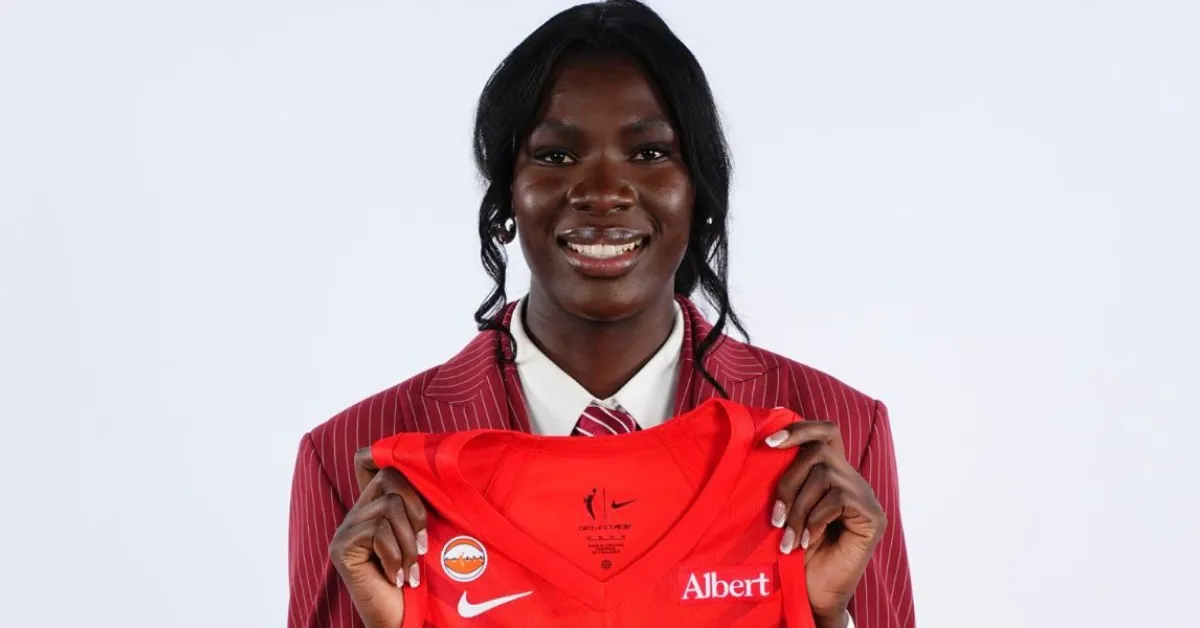
Madina Okot was selected 13th overall by the Atlanta Dream in the 2026 WNBA Draft, becoming the first Kenyan to join the league.
In the early hours of 13 April 2026, her family in Mundubi village, Kakamega County, gathered at home to follow the draft. With no local broadcast available, they moved between television channels before turning to online coverage. Confirmation came during a post-draft press conference streamed from New York, where Okot spoke after her selection.
In her remarks, she thanked her family for their support despite the distance and said she would continue to work hard. She noted that, although she had spoken with several teams before the draft, her final destination had not been certain.
Okot was born in 2004, the fifth of eight children. She grew up in a household where sport was encouraged despite limited opportunities. Her father, Musa Mulah, had once pursued volleyball but abandoned the sport in the early 1990s due to family pressure. Her mother, Jacqueline Nakhumicha, played netball at school. Both parents supported their children’s interest in sport.
She began with netball and volleyball before switching to basketball during secondary school. The move was encouraged by coach Philip Onyango. Although initially hesitant, she adapted quickly and showed strong physical and technical ability.
Her progress continued through local and national competitions, leading to a place with the Kenya Ports Authority team and exposure at an international level. Attempts to move to the United States were delayed by visa denials, which limited her early opportunities.
She later secured admission to Mississippi State University and transferred to the University of South Carolina. There, she became a leading player, averaging a double-double and topping her conference in rebounds. Her performances earned conference honours and national recognition.
Her selection in the WNBA Draft marks a significant step for Kenyan basketball. Coaches have pointed to gaps in talent identification and development systems, noting that many players are discovered late and lack structured support.