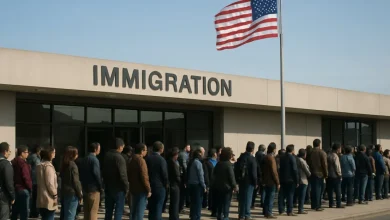
US Immigration Backlog Surpasses 11.6 Million Cases as Processing Times Stretch to 14 Months
The backlog of pending cases at the US Citizenship and Immigration Services (USCIS) has risen to more than 11.6 million, according to new data from the American Immigration Council (AIC).
The figure has more than tripled since late 2015, when the agency reported 3.5 million unresolved applications and petitions. USCIS Director Joseph B. Edlow recently highlighted the scale of the asylum backlog in a post on X.
He said the agency inherited 1.5 million pending asylum cases, compared with 400,000 in 2021, and linked the increase to border policies under the previous administration. The AIC’s findings are based on a newly launched interactive dashboard containing more than 20,000 data points across 190 immigration application categories between fiscal years 2016 and 2025.
The data shows that USCIS processing capacity weakened during the COVID-19 pandemic, as staffing shortages and operational limits coincided with restrictive immigration policies introduced during the first Trump administration. The agency then faced a sharp rise in applications from 2021 onwards.
Between June 2020 and September 2021, the backlog increased by 2.3 million cases. During one quarter in 2021, USCIS received 2.6 million applications but completed only 1.7 million, adding nearly 867,000 new pending cases within three months.
By late 2024, USCIS would have needed almost 10 months to clear the backlog at its existing processing rate. By September 2025, that estimate had increased to nearly 14 months, reflecting both higher demand and lower completion rates during the second Trump administration.
Several immigration categories recorded significant increases in pending cases. Temporary Protected Status (TPS) applications rose by 150% between late 2024 and mid-2025, increasing from 465,000 to nearly 1.2 million. Employment authorisation requests linked to green card applications more than doubled during the same period, while petitions for immigrant and non-immigrant workers also rose sharply.
Denial rates also increased across multiple categories. TPS application denials rose from 2.9% to 12.8% in 2025, while rejection rates for employment authorisation requests increased from 5.1% to 13.6%. By the end of the year, one in three waiver applications was being denied.
The growing backlog has left applicants facing longer waiting periods and greater uncertainty. Extended processing times have also contributed to repeat filings, placing additional pressure on the immigration system.