High Court Rejects Paul Makenzi’s Bid to Leave Shimo la Tewa Prison
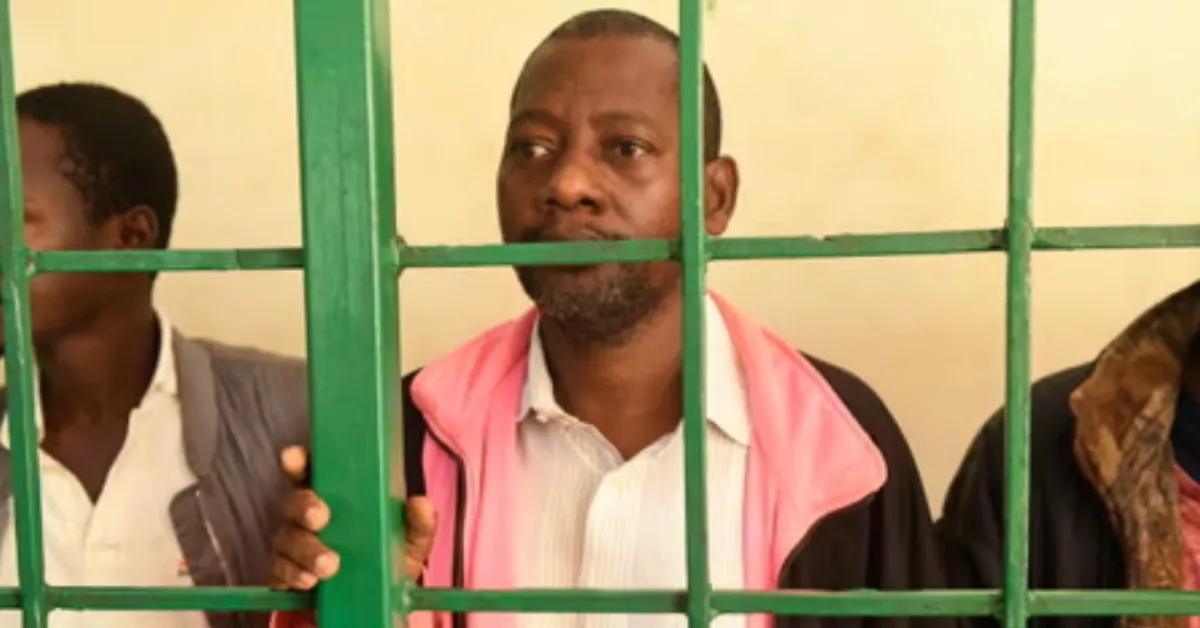
The High Court has rejected an application by controversial preacher Paul Makenzi to be transferred from Shimo la Tewa Prison, ruling that his continued isolation at the facility is lawful and necessary.
Justice Jairus Ngaah dismissed Makenzi’s claims of torture and mistreatment, saying he had failed to provide credible evidence of a threat to his health or safety that would justify a transfer under the Persons Deprived of Liberty Act. Makenzi had alleged that he was being held in inhumane conditions, including prolonged isolation and denial of sunlight.
He also claimed that attempts had been made to poison him through his food, saying he had found glass particles in some meals. He further alleged that prison authorities planned to cover his cell window with iron sheets.
The court found that these claims were not supported by sufficient evidence. Makenzi had not provided medical reports, photographs or independent evidence to substantiate his allegations. Prison authorities, led by officer-in-charge Abdiwilly Adan, said Makenzi’s segregation was imposed for security reasons and was not intended as punishment.
They said he had been found in possession of mobile phones and SIM cards, had attempted to encourage co-accused persons to go on hunger strike and had sought to radicalise fellow detainees while being taken to court. Adan told the court that prisoners’ food is prepared collectively under strict supervision. He also said the cells are properly ventilated and lit, while inmates have access to open areas for exercise.
He accused Makenzi of making false allegations in an attempt to obtain preferential treatment and prevent routine security searches. Justice Ngaah said the public interest weighed against ordering Makenzi’s transfer, noting that he had been classified as a high-risk terrorism detainee. The judge also considered the proximity of Shimo la Tewa Prison to the courts handling his numerous cases.
The judge referred to international standards, including the Mandela Rules, which allow high-risk prisoners to be segregated where necessary, provided the measure is not indefinite and does not deprive them of human contact. He ruled that segregation imposed lawfully to maintain institutional order and public safety does not, by itself, constitute torture or cruel treatment.
Makenzi faces 203 counts of murder, 124 counts of manslaughter and 13 counts relating to terrorism and radicalisation. He also faces allegations of child cruelty, torture and crimes against humanity under the International Crimes Act.
The charges arise from the mass deaths linked to Shakahola and Kwa Binzaro, where Makenzi is accused of orchestrating the starvation and indoctrination of his followers. The ruling means that Makenzi will remain at Shimo la Tewa Prison as his cases proceed through the courts.