Why More African Retirees Are Choosing Cities Over Rural Homes
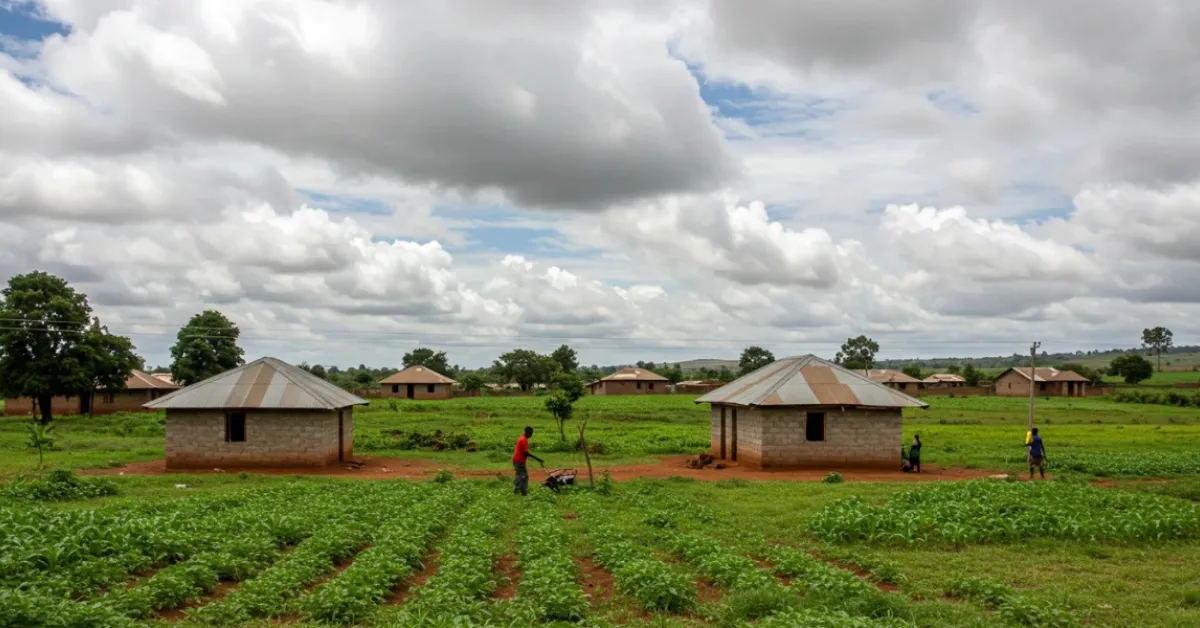
More African retirees are choosing to remain in or near cities rather than return to their ancestral villages.
For decades, retirement across much of Africa was seen as a return to the family home in the countryside. After years of working in urban areas, many professionals expected to move back to their ancestral communities, reconnect with relatives and maintain strong family ties. The move represented both personal success and a dependable source of support.
That pattern is changing. A growing number of retirees are choosing gated estates, satellite towns and planned suburbs instead of rural homes. The shift reflects changing priorities, with dependable infrastructure increasingly replacing extended family networks as the main source of security in retirement.
Africa’s population trends highlight the scale of this change. By 2050, the continent’s urban population is expected to reach 1.4 billion, with six in ten Africans living in cities. This will make Africa the world’s second-largest urban region after Asia. Kenya reflects this trend.
The 2019 census showed that almost one-third of the country’s population lived in urban areas, while Nairobi’s expansion has extended into towns such as Ruiru, Thika and Kikuyu. For many people, their careers, healthcare providers, religious communities and social networks are now centred in metropolitan areas, making a return to rural homes less practical.
Property analysts say retirees are increasingly choosing master-planned communities that offer secure housing, reliable utilities and easy access to essential services. Many also value being close to hospitals, airports and family members. Kenya has more than 2.3 million people aged 60 and above, and many are settling in well-serviced metropolitan areas.
The trend also reflects financial changes. Kenya’s pension sector has grown to Sh2.81 trillion and includes 4.5 million active contributors and about 400,000 formal retirees. Property developers are responding by building managed residential estates designed for older residents who value services and convenience. Where wealth was once measured by the size of land ownership, it is now increasingly associated with reliable electricity, water, security and healthcare.
The shift, often referred to as “semigration”, represents a broader change in African urban development. Retirees are moving away from poorly serviced municipalities and older city centres towards planned residential communities. Private developers have demonstrated demand for neighbourhoods that combine higher-density housing with reliable infrastructure and organised services.