US Cracks Down on Visa Fraud Linked to Birth Tourism
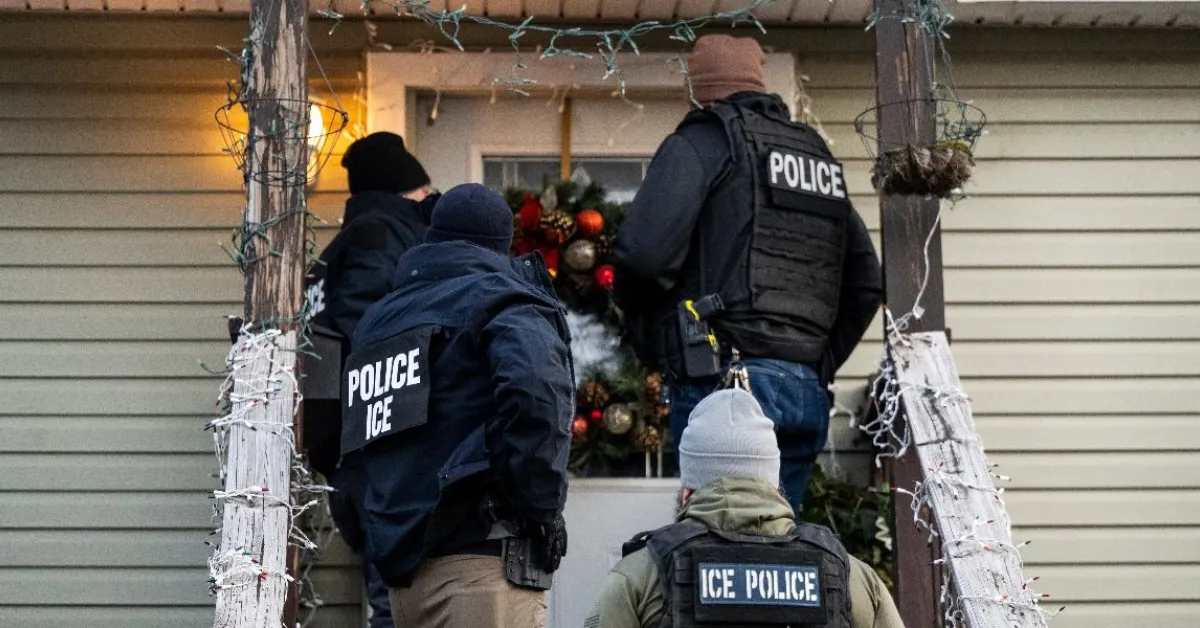
US Immigration and Customs Enforcement (ICE) has launched an initiative to target organised networks suspected of facilitating “birth tourism”, focusing on fraud, financial offences, and visa violations.
Internal communications reported by Reuters indicate that investigators have been directed to prioritise cases involving deception and organised schemes rather than the act of childbirth. Officials have stated that giving birth in the United States remains legal.
A spokesperson for the Department of Homeland Security confirmed that enforcement efforts are aimed at misuse of visas and related offences. Current law does not ban birth tourism, although a 2020 rule limits the use of tourist visas when the primary purpose is to give birth in order to secure citizenship for a child.
As a result, prosecutions typically rely on evidence of misrepresentation or fraud rather than the act itself. Available estimates suggest the practice is limited in scale. The Center for Immigration Studies reported that between 20,000 and 25,000 women travelled to the United States each year for childbirth in the mid-2010s.
In comparison, there were around 3.6 million births in the country in 2025.
The issue is closely linked to wider legal debates on birthright citizenship. Former President Donald Trump argued that birth tourism places a burden on public resources and raises security concerns.
His administration attempted to restrict automatic citizenship through executive action, but the measure was blocked by federal courts and is now under consideration by the Supreme Court. Government lawyers have argued that birthright citizenship has encouraged the growth of organised birth tourism networks.
Previous cases have focused on organised operations. In 2019, federal authorities charged more than a dozen individuals in Southern California with running “birth houses” for wealthy clients from China. Those convicted received prison sentences of varying lengths, and one defendant left the country before sentencing.