From Harvard Labs to Kenyan Headlines: The Legacy of Hilary Ng’weno
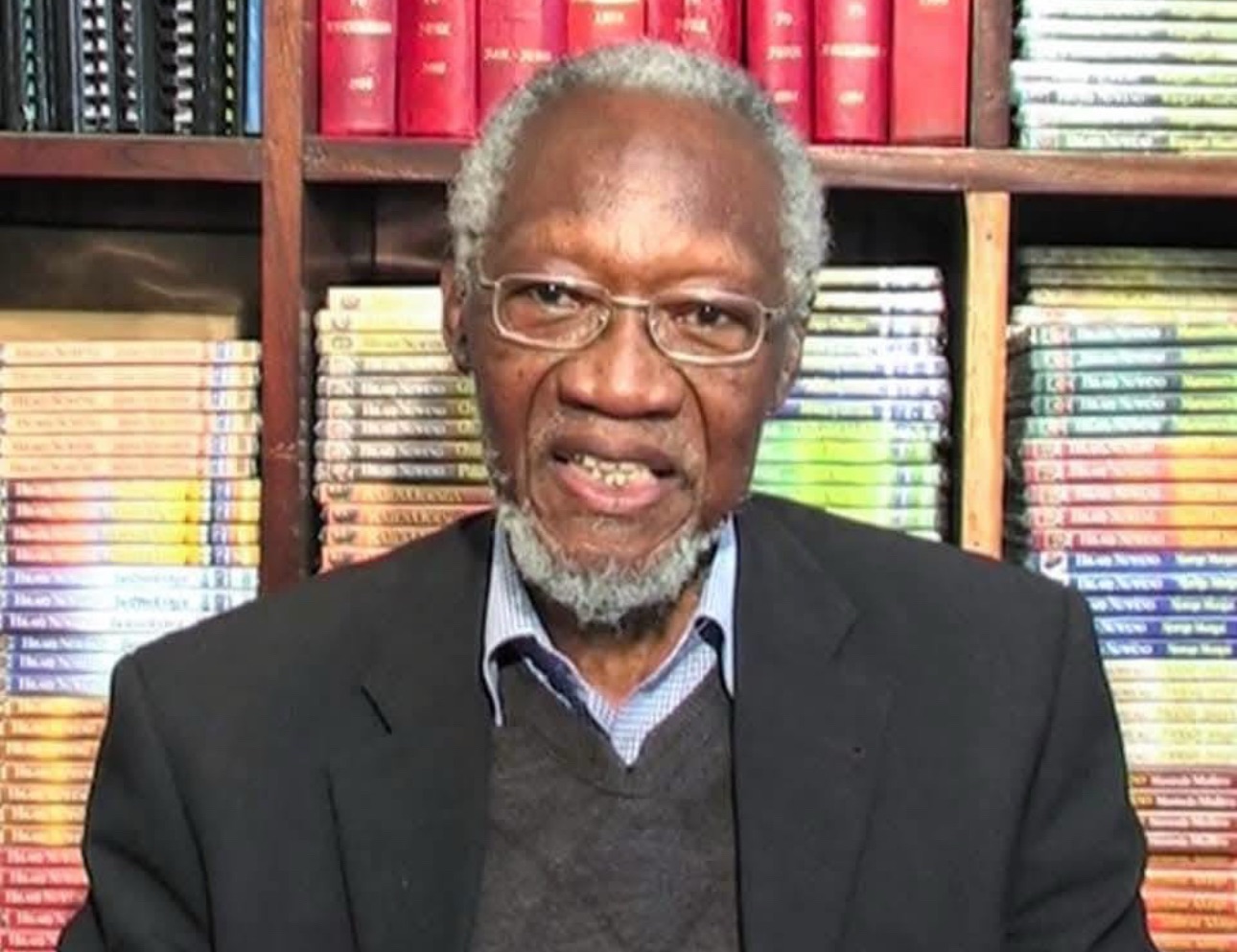
Remembering Hilary Ng’weno: Harvard Physicist Turned Father of Kenyan Journalism
Hilary Ng’weno: The Harvard Nuclear Physicist Who Became the Father of Kenyan Journalism
Today, 8 July, we remember the late Hilary Boniface Ng’weno — the great Kenyan journalist, editor, publisher, historian, author and broadcaster whose death was reported to the nation around this date in July 2021.
Ng’weno passed away on 7 July 2021, but for many Kenyans, the news landed heavily on 8 July — a reminder that one of the sharpest minds in Kenyan journalism had quietly left the stage.
Hilary Boniface Ng’weno — sometimes written as Hillary Ng’weno — was one of the greatest figures in Kenyan media history. A journalist, editor, publisher, historian, author and broadcaster, Ng’weno is widely remembered as a pioneer who helped define serious political journalism in post-independence Kenya. Many have called him the “father of Kenyan journalism”, not because he was the first journalist in the country, but because he raised the standards of the profession and showed that Kenyan-owned media could be bold, analytical, independent and deeply intellectual.
Ng’weno was born on 28 June 1938 in Nairobi and died on 7 July 2021, aged 83. His story began far from the glamour of newsrooms and television studios. He was born to Regina and Morris Onyango, his father being a train driver with the East African Railways. The family lived in the railway quarters around Muthurwa, a working-class Nairobi neighbourhood that shaped many African families connected to the colonial railway economy.
He attended St. Peter Claver’s Primary School before proceeding to Mang’u High School, one of Kenya’s most respected schools. From early on, Ng’weno stood out as exceptionally gifted. His brilliance eventually took him to the United States, where he studied Physics and Mathematics at Harvard University, with a focus on nuclear physics. At the time, this was extraordinary. He became one of the earliest Kenyans to attend Harvard, entering a world very different from the railway quarters of Nairobi where he had grown up.
But while science trained his mind in precision, logic and evidence, journalism captured his imagination. At Harvard, Ng’weno developed an interest in writing and public affairs. He wrote newsletters for African students, followed debates on race, colonialism and global politics, and began to see the power of information in shaping societies. It was also during his time abroad that he married Fleur Arabelle Grandjouan, a French-born naturalist, conservationist and editor who would later play an important role in some of his publishing ventures.
Ng’weno returned to Kenya in 1962, just as the country was approaching independence. He joined the Daily Nation, where his brilliance quickly became impossible to ignore. In 1964, at only 26 years old, he became the first indigenous Kenyan editor-in-chief of the Nation Group. This was a landmark moment. Kenya had just gained independence, and here was a young African editor taking charge of one of the most important newspapers in East Africa.
However, Ng’weno was not simply interested in occupying a prestigious office. He believed in editorial independence and professional journalism. His time at the Nation was short. He resigned in 1965 after tensions over editorial direction and internal resistance. That early departure revealed something that would define his career: Ng’weno was not comfortable being a ceremonial African face in a newsroom where others controlled the real direction. He wanted journalism that could think, question and speak with authority.
In the same year, he addressed issues of press freedom at the International Press Institute assembly in London, appearing on a global platform alongside major political and media figures of the time. He later pursued further studies, including at Harvard’s Center for International Affairs, and also studied film and television production at Brandeis University. This combination of science, politics, journalism and broadcasting gave him a rare intellectual range.
Ng’weno’s great contribution came through his own media ventures. In 1973, he co-founded Joe, a popular political satire comic magazine, together with cartoonist Terry Hirst. Joe used humour and sharp observation to comment on Kenyan society and politics, proving that satire could say what formal political writing sometimes could not.
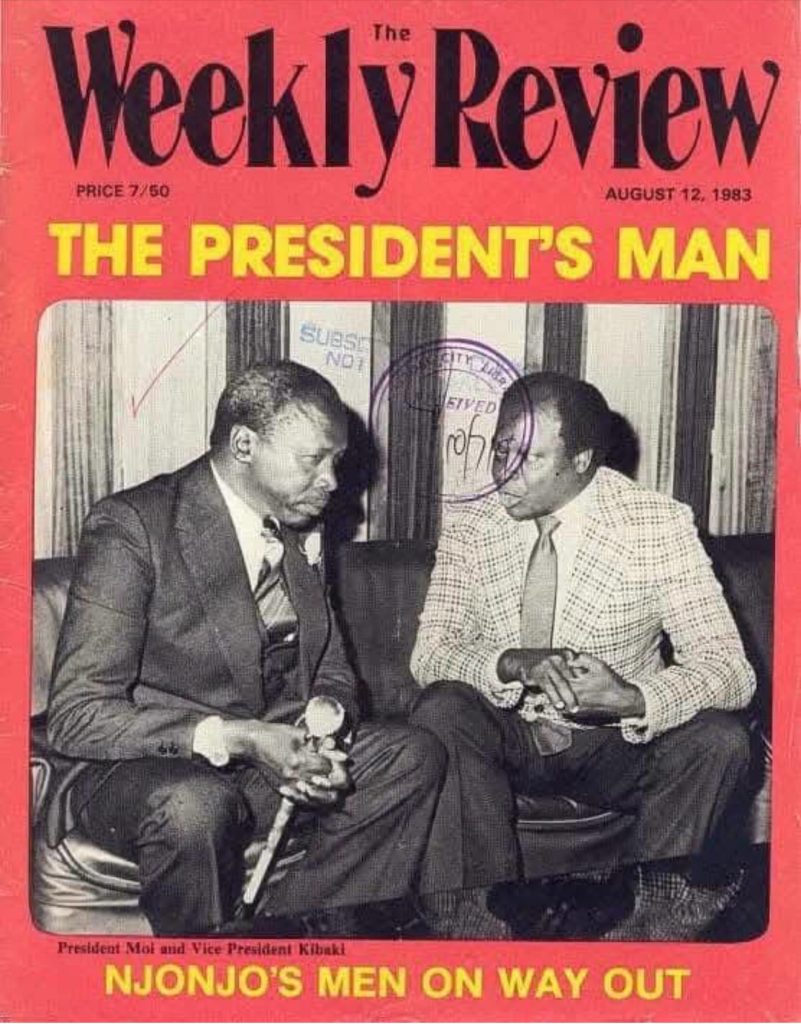
Then in 1975, Ng’weno founded The Weekly Review, the publication that would become his most famous achievement. For nearly a quarter of a century, The Weekly Review stood as one of Kenya’s most respected independent newsmagazines. It specialised in political reporting, commentary and analysis at a time when the political environment was difficult and often intimidating.
Unlike newspapers that focused mainly on daily events, The Weekly Review gave Kenyans depth. It analysed Parliament, elections, government policy, regional politics, the economy and the personalities shaping national life. It became a must-read for politicians, diplomats, academics, journalists and serious citizens who wanted to understand what was really happening behind the headlines.
In the one-party and near one-party years, when direct criticism of power could invite consequences, The Weekly Review walked a careful but important line. It was analytical, sober and serious. It did not rely on shouting; it relied on detail, context and institutional memory. For many Kenyans, it became the gold standard of political journalism.
In 1977, Ng’weno launched The Nairobi Times, which later became a daily newspaper. He eventually sold it to KANU in 1983, after which it was renamed Kenya Times. Under his company Stellascope Ltd., he was also associated with other publications including Rainbow, a children’s magazine edited by his wife Fleur, and Financial Review, among others.
Running independent media in Kenya was never easy. Ng’weno faced financial pressure, advertising challenges and competition from bigger, better-funded media houses such as the Daily Nation and The Standard. Yet he maintained a reputation for high editorial standards. His work showed that African-owned media could be professionally excellent and intellectually powerful, even when the business environment was unforgiving.
Ng’weno was not limited to print. He later moved into television and launched STV, remembered as Kenya’s first independent television news station. Although he sold it after about a year, the venture showed his instinct for the future of media. He understood that journalism was moving beyond newspapers and magazines into broadcast storytelling.
In his later years, Ng’weno became one of Kenya’s most important historical documentarians. He produced major documentary series such as Making of a Nation, which examined Kenya’s political history, and Makers of a Nation, which profiled key figures who shaped the country. These works preserved stories that might otherwise have been lost, especially for younger generations who did not personally witness the independence era, the Kenyatta years, the Moi years and the long struggle for political reform.
His documentary work was important because Ng’weno was not merely recording history; he was organising national memory. He understood that a country that forgets its past becomes vulnerable to manipulation. Through his writing, publishing and film work, he gave Kenya an archive.
Beyond journalism, Ng’weno also served in several public and advisory roles. He was at one time Chairman of the Kenya Wildlife Service and was associated with institutions such as the National Museums of Kenya, the World Wide Fund for Nature, the World Bank, the Kenya Revenue Authority and others. His interests ranged from media and governance to conservation, public administration and national heritage.
He also authored books, including The Men From Pretoria in 1977 and The Day Kenyatta Died in 1978. His work earned him recognition, including the John D. Rockefeller III Award, among other honours.
Ng’weno’s personal life was closely tied to his intellectual and professional world. He and Fleur Ng’weno were married for decades, often described as nearly half a century or more. They had two daughters: Amolo Ng’weno, known for her work in finance, philanthropy and as a co-founder of Africa Online, and Dr. Bettina Ng’weno, an academic and associate professor in African American and African Studies at the University of California, Davis.
Hilary Ng’weno died at his Nairobi home on 7 July 2021, after a long illness described by some accounts as a degenerative disease. His death marked the passing of one of Kenya’s most brilliant media minds.
His legacy remains enormous. He mentored journalists, expanded the space for serious public debate, preserved Kenya’s political history and demonstrated that journalism could be both courageous and disciplined. He was not a loud man of the newsroom; he was a thinking man of the newsroom. His power was in analysis, memory, research and editorial judgment.
Hilary Ng’weno could have spent his life as a nuclear physicist, studying atoms and energy. Instead, he chose to study power, politics and society. In doing so, he helped Kenya understand itself.
He remains one of the great architects of Kenyan journalism — the scientist who became a storyteller, the editor who became an institution, and the historian who left behind a nation’s memory.
Hilary Ng’weno was not just a journalist. He was an archive, an institution, and one of the finest minds Kenya ever gave to the media world.