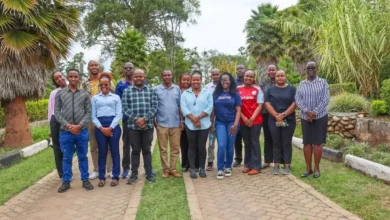
Sheilanne Chabi Explains Why She Left Italy to Begin Again in Kenya

Automotive technician and transportation design graduate Sheilanne Chabi returned to Kenya in May 2026 after spending six years in Italy, following a prolonged struggle to secure stable professional employment in her field.
Chabi had moved to Italy to pursue further training in transportation design, completing a Bachelor’s degree in the field in Torino, a city with a long history in automotive engineering and design. Despite earning an international qualification, she found it difficult to establish herself in the European automotive industry.
Her experience reflects the challenges that can arise when highly skilled migrants seek professional opportunities abroad. For more than a year after completing her studies, Chabi struggled to secure stable employment, placing increasing pressure on her personal and financial circumstances.
Before moving to Italy, Chabi had trained and worked as an automotive technician in Kenya. She later chose to specialise in transportation design, a field that combines engineering, manufacturing, ergonomics, aesthetics and user experience.
Transportation design covers more than the appearance of vehicles. It includes the development of automobiles, motorcycles, rail systems, public transport solutions and marine vessels, making it a specialised field that requires both technical and creative skills.
Torino was a natural destination for Chabi’s studies because of its established links to the automotive industry. The Italian city has played an important role in vehicle engineering and design and hosts institutions and businesses connected to the sector.
Chabi successfully completed her Bachelor’s degree, adding an international qualification to her technical experience. However, securing employment proved more difficult than obtaining the degree.
After more than a year of unsuccessful attempts to find stable work, Chabi began speaking publicly about her experience. Her comments highlighted the gap between the expectations often associated with living abroad and the realities faced by migrants seeking professional careers.
Her experience also showed that international qualifications do not always translate into immediate employment. Competition within specialised industries, economic conditions and other labour market factors can make it difficult for qualified professionals to establish themselves.
Rather than remain in Italy because of concerns about how her return would be perceived, Chabi decided to come back to Kenya. In May 2026, she returned home and took up the position of Executive Director at CAC & Accessories in Syokimau.
Chabi has also spoken openly about the pressure some Kenyans abroad face when considering whether to return home. Migration is often associated with financial success, and those who return without significant savings or visible material gains may fear being viewed as unsuccessful.
She has argued that returning home after making a genuine effort abroad should not be considered a failure. In her view, pursuing an opportunity overseas is itself a significant step, even when the outcome differs from what was originally expected.
Her experience has also highlighted the personal pressures that can accompany prolonged periods abroad. Some migrants may remain overseas despite career difficulties, deteriorating wellbeing or other challenges because they are concerned about how their decision to return would be viewed by relatives and friends.
Such pressures can encourage people to remain in difficult circumstances simply to maintain the appearance of success. For some, returning home may provide an opportunity to rebuild their careers and personal lives in a more familiar environment.
However, reintegration can also present its own difficulties. After spending several years abroad, social networks may have changed, professional opportunities may have shifted and returning home may not feel exactly as it did before leaving.
Chabi acknowledges that rebuilding a life in Kenya requires patience. She nevertheless believes that facing those challenges at home can be preferable to continuing to struggle in isolation abroad.
Her experience comes as more Kenyans reassess the realities of studying and working overseas. Foreign education and employment continue to provide valuable opportunities, but migration does not guarantee professional or financial success.