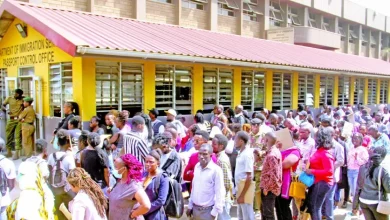
PayPal freeze, block Kenya accounts in money-laundering fears
PayPal has recently started aggressively freezing and blocking many Kenyan accounts as part of tighter anti–money-laundering (AML) and fraud controls, especially where users cannot quickly prove identity, address, and the legitimate source of funds.
PayPal is holding money in an unknown number of Kenyan users’ accounts and permanently banning others if they fail to provide detailed employment and residential documentation.
The company is asking Kenyans who receive money from abroad for contracts for the work being paid for, bank statements, and proof of physical address before releasing funds.
Non‑compliant accounts are blocked from withdrawals or transfers for up to 180 days, and accounts still non‑compliant after that can be permanently deactivated without refunding the sender, under PayPal’s AML drive.
Kenya is on the Financial Action Task Force (FATF) “grey list” of countries at high risk for money laundering and terrorist financing, which is pushing global firms like PayPal to apply stricter checks.
How freezes work and typical patterns
• Affected users can usually still log in and view balances and transaction history but cannot send or receive money, and remaining balances may be held for up to 180 days to cover chargebacks or liabilities.
PayPal flags “unusually large transactions,” sudden spikes in activity on otherwise quiet accounts, and other signs of fraud, which can trigger holds or limitations.
In Kenya, there has been a broader pattern of financial accounts being frozen over AML concerns, including crypto platforms like Binance and other fintechs, reflecting a general regulatory crackdown.
What documentation PayPal is demanding
For Kenyan accounts, PayPal has been requesting:
• Proof of identity and physical address (e.g., government ID plus utility bill or official statement).
Employment or business proof: contracts or agreements for freelance/online work, invoices, or other documentation showing why you are being paid.
Keep your PayPal profile fully updated with accurate legal name, address, and phone, and verify it with a local card or bank where possible.
Avoid sudden very large first‑time transfers; build a transaction history with smaller, consistent amounts where feasible.
Keep clear records (contracts, invoices, WhatsApp or email confirmations) for online work or remittances to show that transfers are legitimate.
If an account is already frozen/limited:
• Log in and go to the Resolution Center to see exactly what PayPal is asking for and upload requested documents promptly.[paykings]• If you are being paid for services (e.g., consulting, freelancing), provide contracts, invoices, and a brief written explanation connecting each large payment to specific work.
Explore alternative regulated channels for remittances and group funds (e.g., bank transfers, licensed remittance services, or platforms with strong Kenya support) and be sure they are compliant with Kenyan AML rules.