The Johns Hopkins University School of Medicine, established in 1893, is a premier private medical school based in Baltimore, Maryland, US, and a pioneer in medical education. It is also constantly ranked as one of the leading biomedical research institutions in the world.
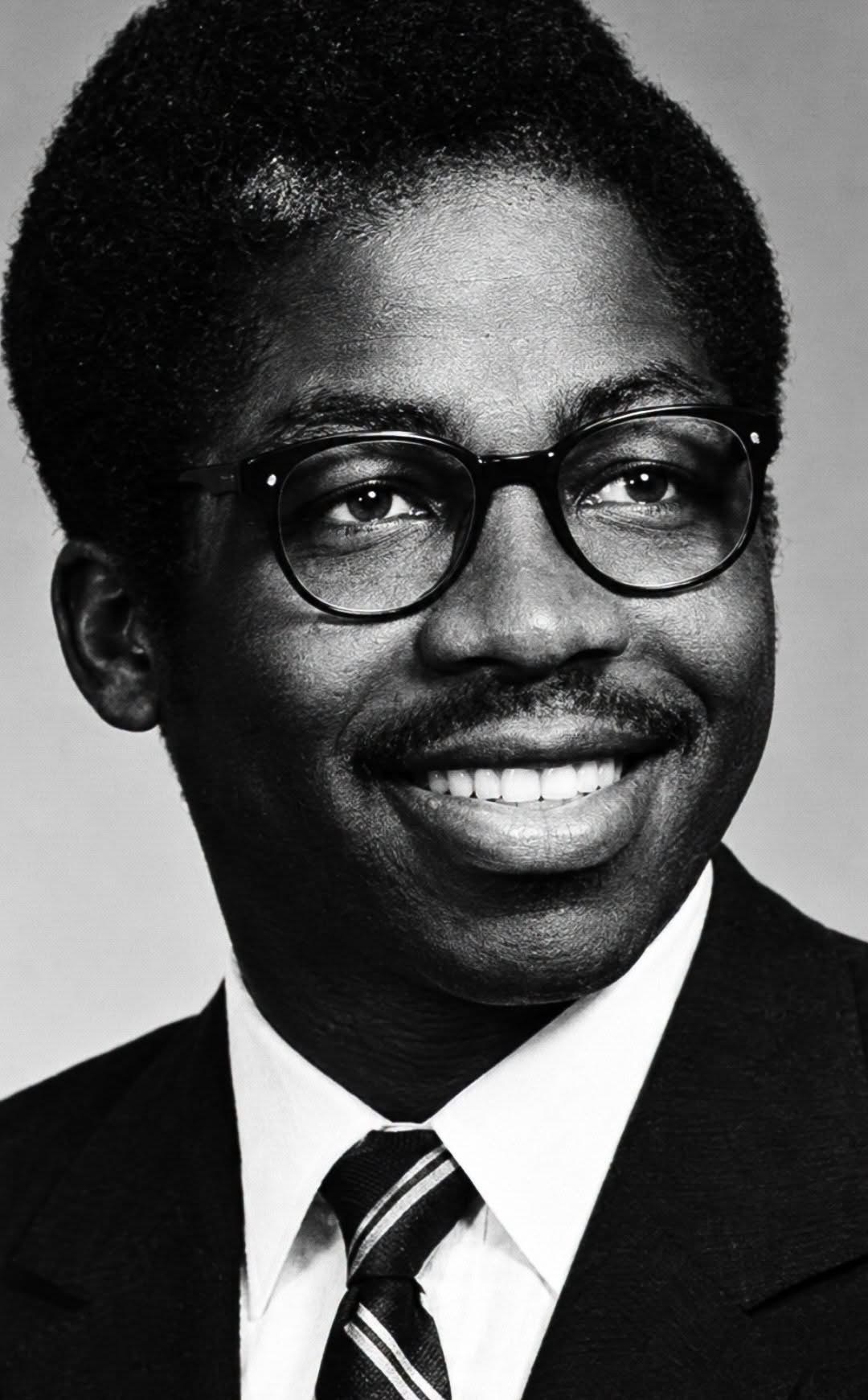
In 1962, a 25 year old Kenyan student, James Nabwangu, became the first Black student to be admitted at the prestigious medical school to pursue medicine. He later on, specialised in neurosurgery in Canada.
Born in 1937 to Mzee Francis Andabwa and Jedidah Lyavule Andabwa of Ebushiangala village Kakamega in Kenya colony, Nabwangu had to overcome colonial disenfranchisement in Kenya and systematic racial segregation in the US to pursue medicine at John Hopkins.
After attending Alliance High School Kikuyu, Nabwangu was one of the many Kenyans who secured scholarships to pursue further education in the US. Even as he left Kenya in 1960, he already had a clear intent of what he wanted to pursue; medicine.
He first attended Anderson College in Anderson, Indiana, for a pre-med course, which he hoped would help him secure a place in a medical school to train as a doctor.
While at Anderson College, one of the students’ advisors advised him to pursue something else because it was highly unlikely that he would be accepted in a medical school. But Nabwangu was already focused, and nothing could sway him from his ambition of becoming a doctor.
Nabwangu went on to prove his advisor wrong in 1962, when he topped his class at Anderson College, an achievement that set him on a straight path to achieve his dream of training as a doctor at John Hopkins Medical School.
The only major hurdle was the stiff competition for the few slots. There were only 25 places, yet the number of applications was 250. Fortunately, Nabwangu was among the lucky 25 to gain admission at Johns Hopkins Medical School.
The announcement of his acceptance was made jointly by Robert A. Nicholson, the dean at Anderson College where Nabwangu did his pre-med , and Dr. Samuel P. Asper, Jr., the associate dean for admissions at Johns Hopkins Medical School.
“This is an exceptionally fine recognition for Mr. Nabwangu,” Dean Nicholson observed, adding that his acceptance came a year earlier than that made possible at most other medical schools. “He is a straight “A” student,” he added. On his part, Dr. Asper described Nabwangu as an outstanding person.
Nabwangu was put on a special five year programme, which saw him achieve a Bachelor of Arts degree from John Hopkins before immediately beginning his medical training. The following year, he was joined by Robert L. Gamble, who became the first African American to be enrolled at John Hopkins to pursue medicine. Unlike Nabwangu, Gamble was put on a regular four year program. In 1967, the two graduated together, becoming the first Black people to graduate as medical doctors from John Hopkins.
Nabwangu’s next goal was to specialise in neurosurgery, a dream that was almost killed by one Kenyan diplomat in the US who urged himto consider general medicine , because general practitioners were really needed back at home. However, Nabwangu stood his ground and before long he received an offer to undergo rigorous postgraduate training at the prestigious Montreal Neurological Institute in Canada. It was in that same year that he met Eleanor, the African American woman who later became his wife.
Eleanor had been involved in translating educational material from English to Lingala and French to help students in the Congo. Because of her charity work in the field of education in Congo, Eleanor was appointed as a senior advisor to the minister of interior in the Congolese government at a reputable salary of $45,000 a year.
As Eleanor prepared to move to Africa to begin her job, her parents connected her with a man they felt could make a good husband.
But just as she was about to leave, a friend also introduced her to Nabwangu, who had just graduated from John Hopkins Medical School.
And, that’s how she cancelled plans to move to Congo to begin the high paying job. She also dumped the potential husband introduced to her by her parents. She had definitely fallen in love with Nabwangu.
They married that same year and moved to Canada, where Nabwangu began his residency in neurosurgery at the Royal Victoria College Hospital.
After Nabwangu finished his postgraduate training, he moved with his wife to Kenya, where he became the first Kenyan neurosurgeon and a consultant neurosurgeon at Kenyatta Hospital in 1972. But in just a few years, they relocated back to the US, where they have remained since then. Nabwangu spent time practising neurosurgery in his wife’s hometown of Rapid City, South Dakota, before retiring to scottsdale Arizona.