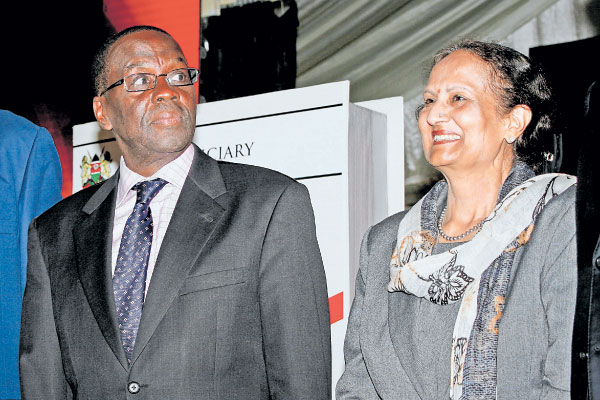
Breaking: Issack Hassan Resigns From IPOA
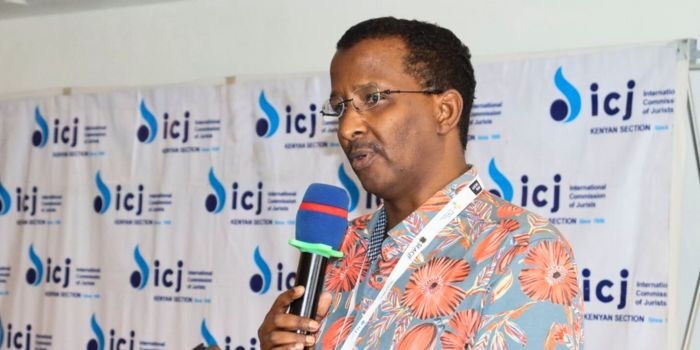
Issack Hassan Resigns From IPOA After Appointment as Court of Appeal Judge
The Chairman of the Independent Police Oversight Authority (IPOA), Issack Hassan, has officially stepped down from his role at the oversight body. His resignation was confirmed on Tuesday, February 17, just a few weeks after he was appointed as a Judge of the Court of Appeal based in Nakuru County.
Hassan’s exit from IPOA comes as he prepares to take up his new responsibilities in the Judiciary. His appointment to the higher court marked a significant milestone in his legal career, bringing to an end his tenure at the authority tasked with overseeing police conduct and ensuring accountability within the National Police Service.
In an official communication released by the board of the Independent Police Oversight Authority, it was announced that Vice Chairperson Ann Wanjiku Mwangi will temporarily assume the role of Chairperson. She will serve in an acting capacity until a substantive appointment is made in accordance with the law.
Ann Wanjiku Mwangi has previously been at the center of major national discussions. She was among the key witnesses who appeared before the Senate to give testimony regarding the death of blogger Albert Ojwang.
During her appearance, she raised serious concerns, stating that CCTV footage connected to the incident appeared to have been interfered with or tampered with, a claim that sparked widespread public debate about transparency and justice.
During his time at IPOA, Hassan introduced a number of reforms aimed at improving police accountability and strengthening the institution’s effectiveness. One of his most notable initiatives was spearheading the IPOA Strategic Plan 2025–2030. He worked closely with Chief Justice Martha Koometo develop this long-term roadmap.
The strategic plan is designed to rebuild public confidence in law enforcement agencies and create a more transparent system over a six-year period.
Hassan was also a strong advocate for modernising policing in Kenya. He pushed for the mandatory use of body-worn cameras by police officers, arguing that the devices would promote transparency, reduce abuse of power, and provide reliable evidence during investigations.
In addition, he proposed banning the use of unmarked police vehicles, saying such vehicles have often been linked to alleged cases of enforced disappearances and other human rights violations.
However, despite these proposals, the rollout of body cameras has not yet been implemented.
Another key area of focus during his leadership was accountability for deaths linked to public demonstrations.
Following the 2024 Gen Z protests, IPOA registered 60 reported deaths connected to the unrest. Under Hassan’s oversight, 22 of these cases were concluded internally, while several others were forwarded to the Office of the Director of Public Prosecutions for further action and possible prosecution.
His administration emphasized the need for thorough, independent investigations to ensure justice for victims and their families.
To further strengthen investigative independence, Hassan recommended the establishment of a fully independent forensic laboratory.
He argued that such a facility should operate separately from both the police service and IPOA itself, in order to eliminate conflicts of interest and enhance the credibility of forensic evidence used in sensitive cases.
Beyond local reforms, Hassan also worked to build stronger regional and international partnerships. IPOA signed a Memorandum of Understanding with the African Policing Civilian Oversight Forum(APCOF) to enhance capacity building and share best practices in civilian oversight of policing.
In addition, he engaged the British High Commission to support staff training programmes and governance initiatives aimed at improving operational standards within the authority.
Hassan further promoted a collaborative approach to security governance. He organized high-level discussions with Regional Security and Intelligence Committees in areas such as Kisumu and Embu.
These engagements were meant to strengthen cooperation between state security agencies, oversight institutions, and members of the public, while encouraging open dialogue on policing challenges and accountability.
His resignation marks the end of a reform-focused chapter at IPOA. As he transitions to his new judicial role, attention will now turn to how the authority continues to implement the reforms and accountability measures initiated during his leadership.