A diplomatic stumble by President William Ruto in Tanzania last week revived memories of the East African Community’s 1977 collapse, underscoring how historical mistrust still shapes regional projects.
Ruto’s Tanga Refinery Remark Reopens Old EAC Wounds
Story by Jack Gor, US-based journalist
DAR ES SALAAM — A diplomatic stumble by President William Ruto in Tanzania last week revived memories of the East African Community’s 1977 collapse, underscoring how historical mistrust still shapes regional projects.
During a closed-door meeting in Dar es Salaam, President Samia Suluhu Hassan reportedly pressed Ruto to explain why he had publicly announced plans for a “mega oil refinery” in Tanga without prior consultation with her government. The issue spilled into a joint press briefing on Kenya-Tanzania trade, where Suluhu publicly asked Ruto to clarify what he and Uganda’s President Yoweri Museveni meant by the proposal.
Ruto responded in Kiswahili, offering an apology: “Sikujua tangazo langu la kujenga refinery hapa Tanzania limewakera. Ningelijua ningesema ijengwe Mombasa, Kenya.”
“I did not know that my announcement to build a refinery here in Tanzania would offend you. Had I known, I would have said it should be built in Mombasa, Kenya.”
The remark drew swift criticism from Kenyans online, who accused the president of bypassing diplomatic protocol. “He should differentiate between Kenya and Tanzania,” one user wrote. “He’s used to making off-the-cuff statements at home that don’t work across borders.”
Ruto is on a three-day state visit and is scheduled to address Tanzania’s Parliament, where he is expected to explain the project further to lawmakers.
Echoes of 1977: Why Tanzania Treads Carefully
The friction is not without precedent. Tanzania has historically been cautious about regional projects that appear to benefit Kenya disproportionately — a grievance that contributed to the collapse of the first East African Community in 1977.
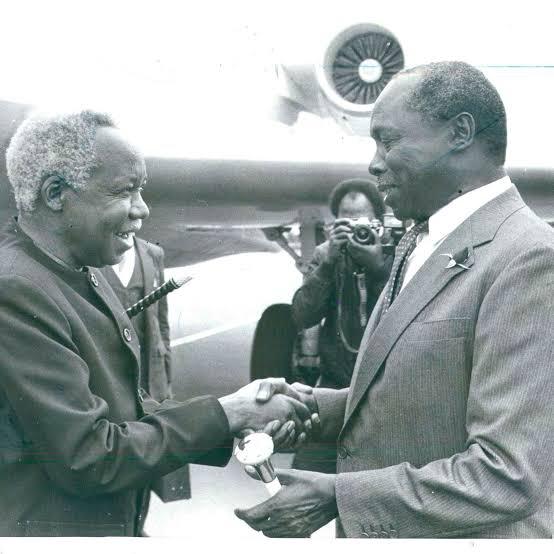
Founded in 1967 by Julius Nyerere of Tanzania, Jomo Kenyatta of Kenya, and Milton Obote of Uganda, the EAC fell apart a decade later amid deep ideological rifts and economic imbalance. Kenya pursued a capitalist model that attracted foreign investment, while Tanzania adopted Ujamaa socialism under Nyerere. Uganda, after Idi Amin’s 1971 coup, descended into instability.
By 1976, Kenya accounted for 83% of intra-community exports, leaving Tanzania and Uganda with growing trade deficits. Nyerere refused to sit with Amin, creating a leadership vacuum because EAC decisions required unanimity. Budget disputes in 1977 proved fatal. Kenya withheld funding and formally withdrew in June 1977. Tanzania closed its border with Kenya in February that year. Shared services — including East African Airways and the common railway system — disintegrated. Kenya assumed control of community assets within its borders, launching Kenya Airways two days after the collapse.
That history informs Dar es Salaam’s sensitivity to unilateral announcements.
The Refinery Proposal
Two weeks ago, Museveni visited Nairobi, where he and Ruto announced plans for a major refinery depot in Tanga. The goal: reduce East Africa’s reliance on imported fuel by refining crude locally. Nigerian billionaire Aliko Dangote, who built Africa’s largest refinery in Lagos, was floated as a potential investor.
Supporters argue a Tanga facility would cut shipping costs and shield the region from volatile global fuel prices. Critics in Tanzania say the lack of prior consultation revives the very dynamics that doomed the original EAC — the perception that Kenya sets the agenda and others are expected to follow.
Trust, Consultation, and the Road Ahead
The current EAC, revived in 2000, has expanded to eight members and touts a common market and customs union. Yet projects of this scale test its foundational principle: sovereign equality.
For Ruto, the Parliament address in Dodoma offers a chance to reset the tone — to frame the refinery as a joint EAC asset rather than a Kenyan initiative placed on Tanzanian soil. For Suluhu, the episode reinforces Tanzania’s long-standing demand: consultation first, announcements later.