Kenya Braces for Wetter Short Rains as El Niño Strengthens
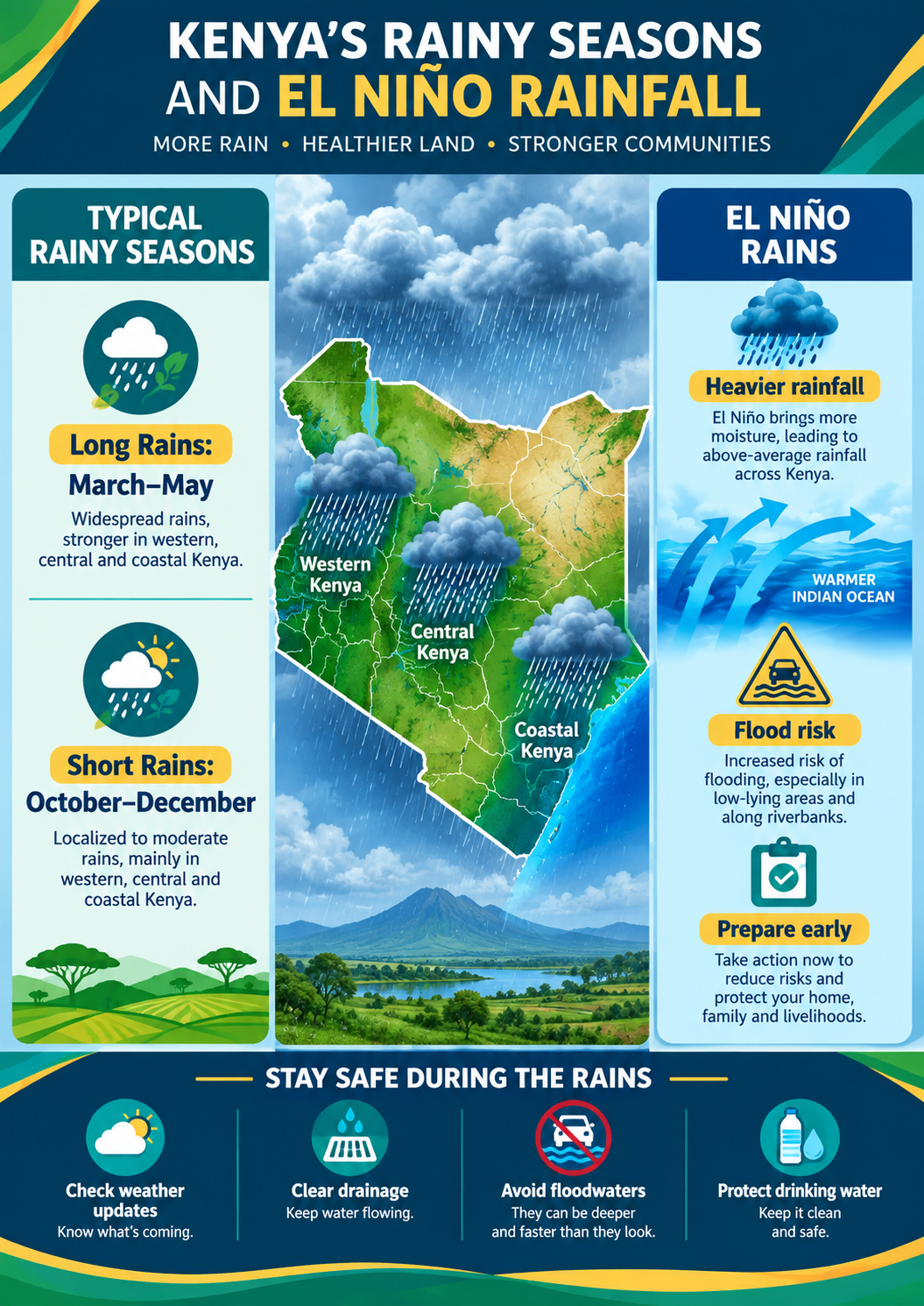
Kenya is expected to experience a wetter-than-normal October–December 2026 short-rains season as El Niño conditions strengthen across the Greater Horn of Africa. The outlook raises concern for heavy rainfall, flash floods, river flooding, landslides, damaged roads, and travel disruptions—while also offering potential benefits for water supplies, pasture, and agriculture if the rains are well managed.
Northeastern Kenya is among the areas of greatest concern, with a strong likelihood of above-normal rainfall and elevated flood risk. Central Kenya and the Lake Victoria Basin may also receive exceptionally high rainfall totals during the three-month season.
What the forecast says
The Kenya Meteorological Department, ICPAC, and the World Meteorological Organization expect above-average rainfall across large parts of Kenya between October and December. Some outlooks indicate that many counties may receive more than 125 percent of their usual seasonal rainfall.
ICPAC projects a 90 percent likelihood of enhanced rainfall in northeastern Kenya. Central Kenya and the Lake Victoria Basin also have a high likelihood of receiving more than 400 millimetres of rain over the October–December period.
The expected start of the short rains is early to normal in many areas of central and eastern Kenya. In other parts of the country, rains may begin between the second and fourth weeks of October. Western Kenya may experience rain earlier, with wet conditions in some locations potentially continuing into January.
The forecast also points to warmer-than-normal conditions across the region, with eastern Kenya facing particularly high probabilities of above-average temperatures.
Areas needing attention
Area
Main concern
Northeastern Kenya
High probability of wetter-than-normal conditions and increased flood risk.
Central Kenya
Potential for heavy seasonal rainfall, with some areas likely to receive more than 400 mm from October through December.
Lake Victoria Basin and western Kenya
Possibility of heavy rain, flooding, and a longer rainy period in some locations.
Nairobi and surrounding urban areas
Blocked or inadequate drainage may increase the risk of flash floods, road closures, and disruptions to business, school, and transport.
Coast and eastern Kenya
Early-to-normal rainfall onset is expected in many places; communities should closely follow county-level flood and transport advisories.
How serious could it be?
Current outlooks indicate that El Niño may continue strengthening and could persist into early 2027. Kenya Meteorological Department reporting has cited an 81 percent probability that the event could become very strong and a 97 percent probability that it may continue into the early months of 2027. Other reports suggest El Niño conditions may last as late as February 2027.
However, seasonal forecasts are not exact guarantees. Rainfall can differ greatly from one county to another and even between neighboring communities. Kenya Met officials have also said the 2026 event is not presently expected to reach the extraordinary scale of the 1997 El Niño rains, partly because Indian Ocean conditions are not forecast to be as warm as they were then.
Risks and possible benefits
The major risks include flash flooding, overflowing rivers, landslides, damaged homes, washed-out roads, delayed travel, crop losses, livestock losses, and interruptions to schools and businesses. Low-lying urban neighborhoods are particularly vulnerable when drainage systems are blocked, undersized, or poorly maintained. Flooding may also increase the risk of waterborne and vector-borne illnesses.
At the same time, well-distributed rainfall can bring important benefits. It can replenish dams, rivers, groundwater, and grazing land; improve water availability; and support stronger crop production. The difference between benefit and disaster will depend heavily on preparation, drainage, early warnings, and community response.
How families can prepare
- Follow daily and weekly updates from the Kenya Meteorological Department, especially county-specific warnings and rainfall advisories. Seasonal forecasts provide a broad picture, but local conditions can change quickly.
- Clear gutters, drainage channels, and household compounds. Avoid dumping rubbish in drains, waterways, or culverts.
- Do not walk, ride, or drive through moving floodwater. Floodwater can be deeper and faster than it appears.
- Prepare an accessible waterproof emergency bag with identification documents, medications, drinking water, nonperishable food, a flashlight, phone chargers, clothing, and essential supplies.
- Families living near rivers, steep slopes, drainage channels, or known flood-prone estates should identify safer routes and a temporary place to relocate before heavy rain begins.
- Keep children away from swollen rivers, open drains, and flooded roads.
- Farmers should seek ward- and county-level guidance on planting dates, seed selection, farm drainage, crop protection, and safe shelter for livestock.
A call for early action
The key message for communities across Kenya is simple: prepare early, stay informed, and take local warnings seriously. The October–December rains may bring much-needed water and agricultural opportunity, but they may also become dangerous where preparedness is weak.
From October onward, households, community leaders, farmers, schools, businesses, and county authorities should monitor Kenya Met forecasts closely and act before flooding begins—not after.