Canada Opens 5,500 Permanent Residence Spaces Under New Rural Immigration Policy, Creating Pathway for Skilled African Workers

Canada has created 5,500 permanent residence spaces under a new rural immigration policy, opening a direct settlement pathway for skilled African workers, including Kenyans, at a time when the United States is tightening its skilled-worker routes. The program is administered by Immigration, Refugees and Citizenship Canada (IRCC), the federal department headquartered in Ottawa, and was reported on November 10, 2026 by Business Insider Africa.
The policy operates under the Liberal government of Prime Minister Mark Carney, in office since March 2025, and directs newcomers toward rural and remote communities that struggle to attract workers through Canada’s mainstream economic immigration streams. Business Insider Africa framed the change as a concrete opening for skilled African professionals rather than a general expansion of Canada’s overall intake, with permanent residence offered rather than a temporary permit.
The 5,500 spaces are notable precisely because Canada has been shrinking its immigration numbers. The Immigration Levels Plan 2026-2028, released in October 2025, cut the permanent residence target for 2026 to 254,000 admissions, meaning the rural allocation represents roughly 2 percent of the year’s entire permanent residence quota. The carve-out signals that Ottawa intends to keep channeling foreign workers into small communities even as it reduces totals nationwide.
The new policy extends an approach Canada has tested for years. The Rural and Northern Immigration Pilot (RNIP) ran from 2019 to 2024 and settled thousands of newcomers in 11 participating communities spread across five provinces, from Ontario and Manitoba to British Columbia. It was succeeded in 2025 by the Rural Community Immigration Pilot and the Francophone Community Immigration Pilot, which fixed rural settlement as a standing feature of Canada’s economic immigration program.
Rural streams work differently from Express Entry, Canada’s main points-based system, which favors young, highly credentialed candidates with top Comprehensive Ranking System scores. Under the community-based model, candidates generally need a qualifying job offer from an employer in a participating community together with a recommendation from that community, which lowers the barrier for skilled applicants who would not clear Express Entry cutoffs in competitive draws.
The streams carry no per-country caps, which is central to the African angle identified by Business Insider Africa. French speakers have an added advantage: Express Entry awards up to 50 bonus points for French-language proficiency, and Canada has set an official target for francophones to account for 8 percent of new permanent residents outside Quebec by 2026, a benchmark that favors applicants from francophone African countries such as Senegal, Cameroon, Cote d’Ivoire and the Democratic Republic of Congo.
The Canadian opening lands as the United States, the traditional first choice for skilled African migrants, becomes costlier and less predictable. President Donald Trump, whose second term began in January 2025, has imposed a $100,000 fee on new H-1B petitions filed by many for-profit employers, in force since October 2025, alongside heightened scrutiny across temporary visa categories. Business Insider Africa notes that Canada has consequently become a leading alternative destination for skilled workers weighing their options.
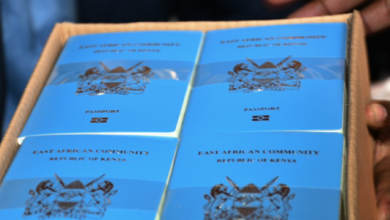
For Kenyan applicants, the route carries an added attraction: dual citizenship. Under the Kenya Dual Citizenship Act 2010, Kenyans who naturalize as Canadians do not lose their Kenyan citizenship, meaning they can hold Canadian passports while retaining rights to property and residence back home. The Central Bank of Kenya has consistently recorded the diaspora as one of the country’s largest sources of foreign exchange, with annual remittances above $4 billion and North America the biggest sending region, so any lawful pathway that shifts Kenyan earners from temporary status to permanent residence deepens that flow.
Practically, the process begins with an employer rather than a points score. Candidates must secure a job offer from a designated employer in one of the participating rural communities, and IRCC publishes the list of communities, employers and allocated spaces on its official website, with the 5,500 spaces distributed among the participating communities for the program year.