When Moi Visited Ground Zero: A Moment of Solidarity Between Kenya and America
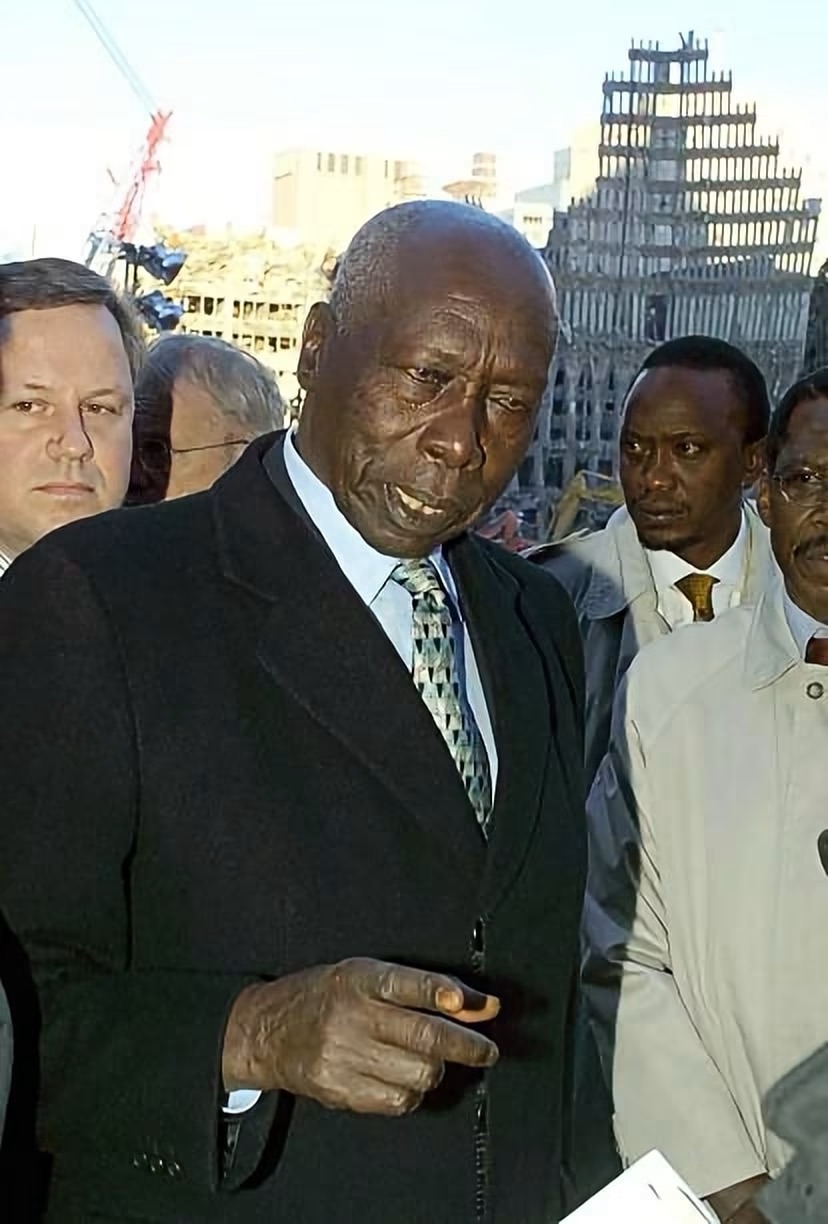
On November 11, 2001, President Daniel arap Moi visited Ground Zero in New York, the site where the World Trade Center’s Twin Towers had stood before the September 11 terrorist attacks. Archival photo records document the Kenyan leader’s tour exactly two months after the tragedy, during his visit to New York for the 56th United Nations General Assembly.
For a Kenyan audience, the visit carries a meaning deeper than diplomatic protocol. It brought together the experiences of two countries that had witnessed devastating terrorist attacks and offered a moment through which today’s diaspora can reflect on the connections between home and the places where they have built new lives.
From Nairobi’s Pain to New York’s Grief
Three years before the attacks on New York, Kenya had suffered its own catastrophe.
On August 7, 1998, terrorists bombed the United States embassies in Nairobi and Dar es Salaam in nearly simultaneous attacks. The Nairobi bombing killed 213 people, according to the U.S. State Department’s accountability review, and left thousands injured. The destruction reached far beyond the embassy, devastating the surrounding area and the lives of ordinary people going about their day.
That history gives Moi’s Ground Zero visit particular significance. Kenya was not simply a distant country acknowledging an American tragedy. It was a country whose people already understood the lasting consequences of terrorism: sudden bereavement, serious injuries, shattered workplaces and families forced to rebuild.
Seen against that background, the visit can be understood as a gesture of solidarity rooted in shared experience.
A Visit During a Defining International Moment
Moi’s tour took place as world leaders gathered in New York for the United Nations General Assembly. The September 11 attacks had brought international security and the response to terrorism to the centre of diplomatic discussion. Contemporary reporting also described Moi as an early African supporter of the international campaign against terrorism.
November 11 was itself a significant day of remembrance. United Nations Secretary-General Kofi Annan accompanied U.S. President George W. Bush to Ground Zero that day, marking two months since the attacks.[news.un]Moi’s presence belongs within that wider moment of international mourning. A visit to the site offered something that formal statements alone could not: a visible acknowledgment of the loss suffered in New York.
Why the Story Matters to the Diaspora
For Kenyans living abroad, this episode offers a way to think about belonging across borders.
A diaspora perspective does not require choosing between remembering Nairobi and mourning New York. Instead, it allows both histories to sit alongside each other. The victims of terrorism are not only figures in national accounts; they are parents, children, colleagues, neighbours and friends.
Moi’s visit can therefore be read as more than an encounter between a visiting president and an American landmark. It is a reminder that compassion need not stop at the boundaries of nationality.
Remembering this moment also creates space to revisit the Kenyan victims of the 1998 embassy bombing. Their suffering belongs in the wider story of the attacks that connected East Africa and the United States before September 11.
Remembering the Moment Accurately
One detail deserves care. The visit has been described in a circulating historical post as the first by an African leader. However, the archival material reviewed confirms Moi’s visit and its date without independently establishing that distinction. The United Nations also records that Kofi Annan, a Ghanaian serving as UN secretary-general, had visited Ground Zero on September 18, 2001. His role was different from that of an African head of state, but his earlier visit makes the broader wording “first African leader” potentially misleading.
The strongest account does not need an uncertain claim of precedence. The documented event is meaningful on its own: Kenya’s president visited the site of America’s devastating loss, bringing with him the perspective of a nation that had experienced its own.
For a diaspora community looking back, that is the enduring significance of the moment a connection between Nairobi and New York grounded not only in diplomacy, but in grief, remembrance and human solidarity.