What Are Kenya’s Most Counterfeited Goods?
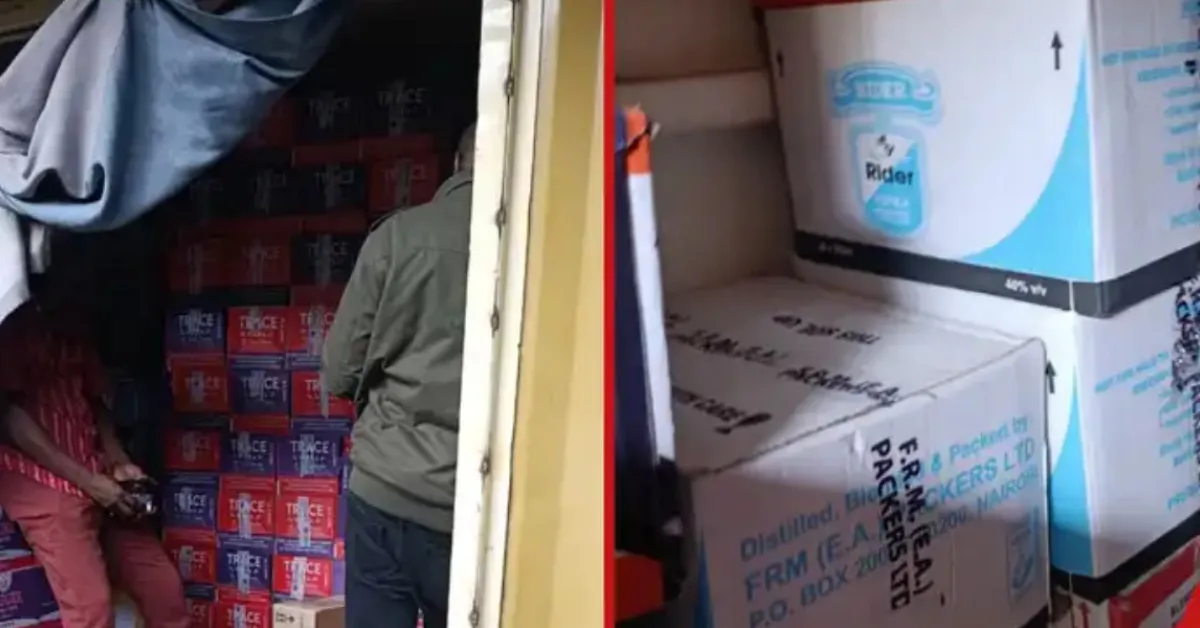
Kenya’s security agencies seized 149,565 units of contraband and counterfeit goods between September 2024 and August 2025, a drop of more than 50 percent from the previous year, according to a report tabled in Parliament.
The Annual Report on the State of National Security, presented by President William Ruto, shows seizures fell sharply from 321,786 units recorded in the preceding 12 months. Despite the decline, the report states that illicit trade remains widespread, with sugar, ethanol, alcohol and cigarettes making up the largest share of intercepted goods.
Authorities confiscated 52,075 kilogrammes of sugar, 58,193 litres of ethanol, 24,570 litres of alcohol, 9,707 packets of cigarettes and 24,570 cartons of alcoholic beverages. Other seized items included cooking oil, fertiliser, milk and cosmetics. Contraband rice and spaghetti, which had featured prominently in earlier years, were largely absent, with rice seizures dropping to zero and spaghetti falling by 99 per cent.
Some categories recorded increases. Seized fertiliser bags rose from 521 to 685, while contraband milk increased from 2,390 litres to 3,437 litres. The report also notes the continued circulation of pirated ICT hardware and software, reflecting a shift towards more complex forms of illicit trade.
President Ruto said contraband and counterfeit goods continued to undermine revenue collection, industrial growth and public safety. He noted that illicit trade weakens domestic industries and exposes consumers to unsafe products, with neighbouring countries identified as the main sources of smuggled goods.
The report attributes the persistence of illegal trade to sustained demand for cheaper products, which encourages black-market activity and discourages formal commerce. This demand, combined with porous borders, continues to challenge enforcement efforts.
To counter the problem, the government has stepped up border surveillance, intensified operations against distribution networks and expanded public awareness campaigns. Security agencies have also deployed advanced scanning and tracking technologies at key entry points and increased patrols along known smuggling routes.
However, the report highlights ongoing constraints, including limited access to modern detection equipment at some border posts. Corruption and collusion between smugglers and officials remain concerns, while inadequate storage facilities for seized goods complicate investigations and prosecutions. The growth of online marketplaces has further enabled the distribution of counterfeit pharmaceuticals and cosmetics.
In response, the government plans to invest in mobile scanners, surveillance cameras and digital tracking systems. It is also preparing to introduce integrated product marking and identification for goods to help distinguish legitimate products from counterfeits.
Additional measures include strengthening internal anti-corruption systems, speeding up the prosecution of contraband-related cases and improving intelligence-sharing among agencies. The State is also working more closely with private-sector partners in retail, transport and ICT to disrupt supply chains and encourage reporting of illegal activity.