Voices of the Indian Diaspora in America
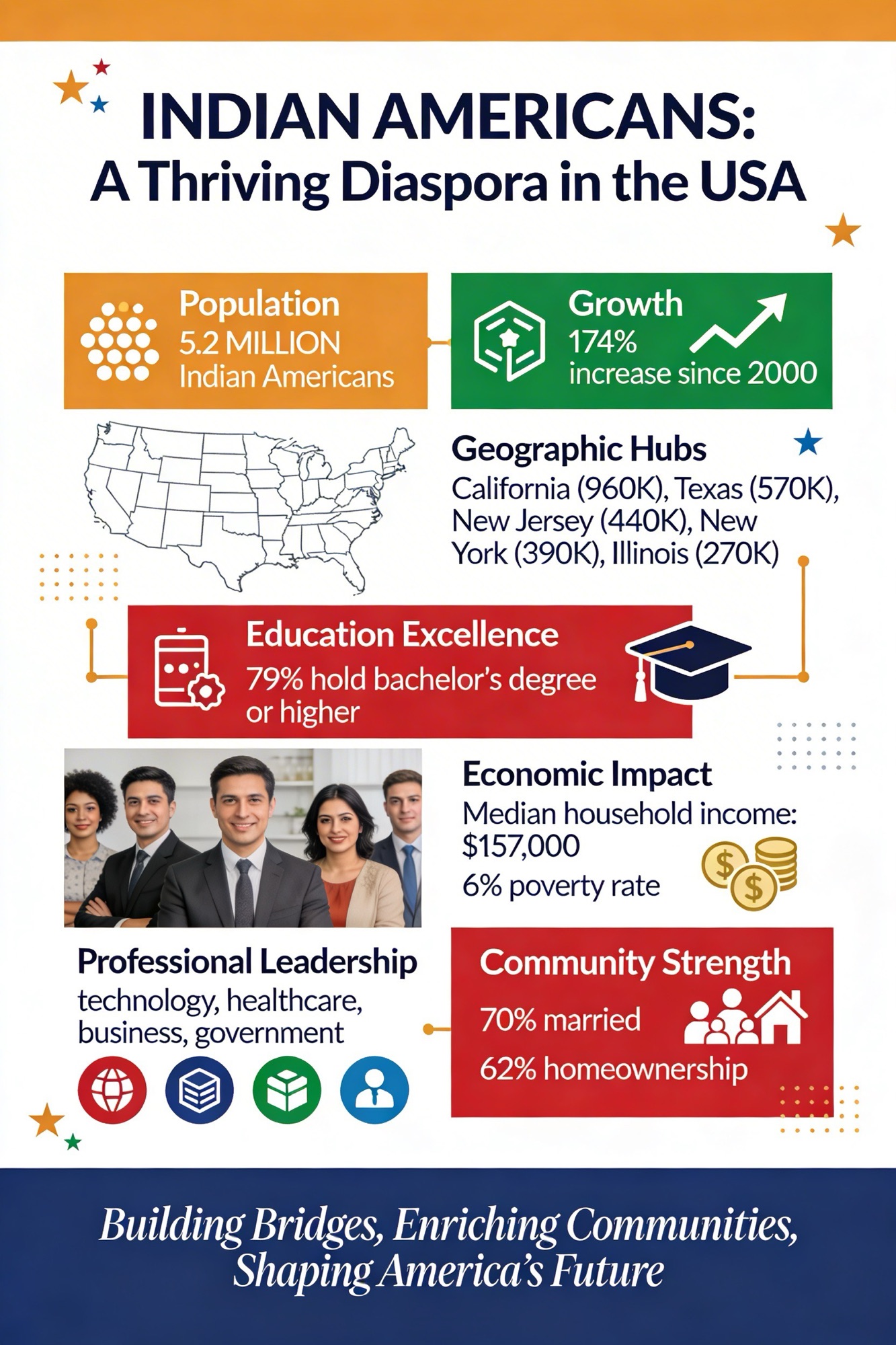
Indian Americans in the U.S.: Prosperity, Pressure, and Possibility
Walk into a busy hospital, a tech campus, a university lab, or a suburban cul‑de‑sac in many parts of the United States, and chances are you’ll find an Indian American story unfolding there. Behind the numbers, titles, and impressive resumes are families who crossed oceans, rebuilt their lives from scratch, and are now quietly shaping America’s future.
One of the most striking facts about Indian Americans today is their economic success. The median household income for Indians in the U.S. is roughly 150,000 dollars a year, the highest among broad ethnic groups in the country. That number is eye‑catching, but it doesn’t tell the whole story. It’s the result of decades of migration patterns, sacrifice, long nights of study, and the unspoken pressure many in the community carry on their shoulders.
More Than Just a High Income
For many first‑generation immigrants, that 150,000 dollars represents the culmination of a journey that started in small towns and big cities across India. Parents left behind aging parents, familiar foods, and native languages, often landing in the U.S. with two suitcases, a student visa, and a heart full of hope.
They worked their way through graduate programs, took on shift work, lived with roommates, and saved every spare dollar. Over time, they moved into professions like engineering, medicine, finance, and academia. The high median income is, in many ways, a reflection of this concentration in high‑skilled fields.
Yet, behind that seemingly smooth upward curve are stories of rejection letters, visa anxieties, and the constant fear that one wrong step could derail years of effort. When we talk about “success,” we often forget the quiet resilience that built it.
The American Dream, Indian Edition
For many Indian American families, the American Dream comes with its own cultural flavor. Weekend mornings might start with chai and the smell of masala, followed by kids rushing off to basketball practice and then Bharatanatyam or Bollywood dance class. Homes are filled with a mix of English and Indian languages, with conversations jumping easily between college applications and wedding plans back home.
Financial stability has allowed many Indian Americans to invest in good school districts, extracurriculars, and college savings plans for their children. But it has also brought a different kind of pressure: the expectation to maintain that success, to “make the struggle worth it” for the parents who sacrificed so much.
Second‑generation Indian Americans often grow up hearing stories of how their parents studied under kerosene lamps, walked long distances to school, or survived on instant noodles while finishing their degrees abroad. These stories are both an inspiration and a weight. They remind the younger generation how far their families have come—and how far they feel they need to go.
The Quiet Pressures Behind the Numbers
High income doesn’t mean life is easy. Many Indian American professionals work long hours in demanding jobs. Burnout, mental health struggles, and loneliness are more common than people admit in public.
There are unspoken expectations:
• To choose “respectable” careers.
• To support family back in India.
• To maintain a certain standard of living in the U.S.
• To be a “model minority” and avoid making mistakes.
On the outside, the community may look secure and settled. Inside, many juggle the stress of mortgages, children’s education, support for aging parents both here and abroad, and their own quiet questions about purpose and identity.
Identity Between Two Worlds
Indian Americans often live between two emotional homelands. India is where their roots lie—the festivals, the languages, the food, the family WhatsApp groups buzzing at odd hours. America is where their opportunities, careers, and children’s futures are grounded.
This in‑between space shapes everything:
• Children who feel “too Indian” at school and “too American” at family gatherings.
• Parents who are fluent in English at work but switch to their mother tongue to comfort a crying child.
• Young adults who learn to say their names twice—once for family, once in a simplified version for colleagues.
The economic success is real, but so is the inner work of belonging. Many spend years learning to be comfortable with hyphenated identities: Indian‑American, not one or the other, but both.
Giving Back and Looking Forward
With growing prosperity, many Indian Americans are investing their energy not just in personal success but in community impact. You see it in:
• Philanthropic efforts to support education, healthcare, and disaster relief in India.
• Local community organizations, temples, churches, and cultural centers that support new immigrants and organize festivals.
• Increasing involvement in U.S. politics, public service, and advocacy, as more Indian Americans run for office or speak up on issues that matter to them.
There’s a quiet but growing confidence in the community—a sense that Indian Americans are not just guests in the American story, but co‑authors of it.
A Human Story Behind Every Statistic
Yes, Indians in the U.S. have a median household income around 150,000 dollars, the highest among broad ethnic groups. But behind that statistic are:
• Parents who left everything familiar for the chance to build a better life.
• Children who navigate two cultures with grace and confusion in equal measure.
• Professionals who work hard not just for themselves, but for families stretching across continents.
The story of the Indian American diaspora is not just about money or success; it’s about endurance, identity, love, and legacy. It’s about people who dared to dream in two languages, loved in two cultures, and found a way to call two places home.