This Is Home Now”: Stories Behind Rural Maine’s Quiet Streets
On a cold morning in rural Maine, the parking lot outside a small-town city hall is filled not just with local pickup trucks, but with families from Kenya,Somali, Gabon, Angola, the Congo, and other countries who have traveled thousands of miles in search of safety and a new beginning. Children in bright winter jackets play near snowbanks while their parents wait in line, clutching folders of documents and translation apps. The scene could be anywhere in America today but this is Sanford, a small community in Maine that never expected to become part of the global asylum story
Newcomers in a Small Town
Many of these families first arrived in Portland, Maine’s largest city and long-time landing place for asylum seekers. When shelter space ran out, word spread by WhatsApp and word of mouth that smaller nearby towns might offer help. In Sanford, a city of about 20,000 in a rural corner of southern Maine, local officials suddenly found themselves trying to house and assist more than 100 new arrivals with just a tiny general assistance office and a handful of staff. For the newcomers, the journey had already been long; now they faced the challenge of starting over in a town they had never heard of.
Faces and Voices of a New Maine
Among those waiting in line was a man from Gabon, known publicly only as Simphor, who came with his wife after fleeing political repression and human rights abuses back home. He described how they had arrived in Portland only to find shelters full, then paid a stranger to drive them to Sanford after hearing there might be housing there. Another man, Miguel from Angola, recounted spending the night in a parking lot in Portland when no shelter bed could be found, even after putting his name on yet another waiting list. Their stories echo those of thousands of African migrants who, over the last several years, have made their way to Maine seeking safety and stability.[npr]A Community Under Pressure, and Responding
For local leaders and residents, the sudden arrival of asylum seekers has been both overwhelming and revealing. City officials in Sanford described their small welfare office as “completely overwhelmed,” with no hotel rooms left and a backlog of appointments for families desperate for a roof over their heads. Yet alongside the strain, there have been acts of solidarity: community meetings, emergency responses, and volunteers stepping in to help translate, donate essentials, and advocate for better coordination at the state level. Leaders in immigrant rights organizations emphasize that what happened in Sanford is not a failure of the families seeking refuge, but of systems struggling to keep up with human need.
Quiet Transformations Across Maine
These scenes mirror a wider transformation unfolding across Maine, from Lewiston’s African-owned shops and restaurants to new faith communities and cultural groups taking root in long-declining mill towns. For decades, Maine was known as one of the whitest and oldest states in America; now, immigrants and refugees are quietly helping to revive local economies, fill critical jobs, and bring new life to neighborhoods once marked by empty storefronts. The journey is not easy racism, language barriers, and policy changes still shape daily life but many families say that, after years of displacement and danger, they finally feel able to say: “This is my home now.”
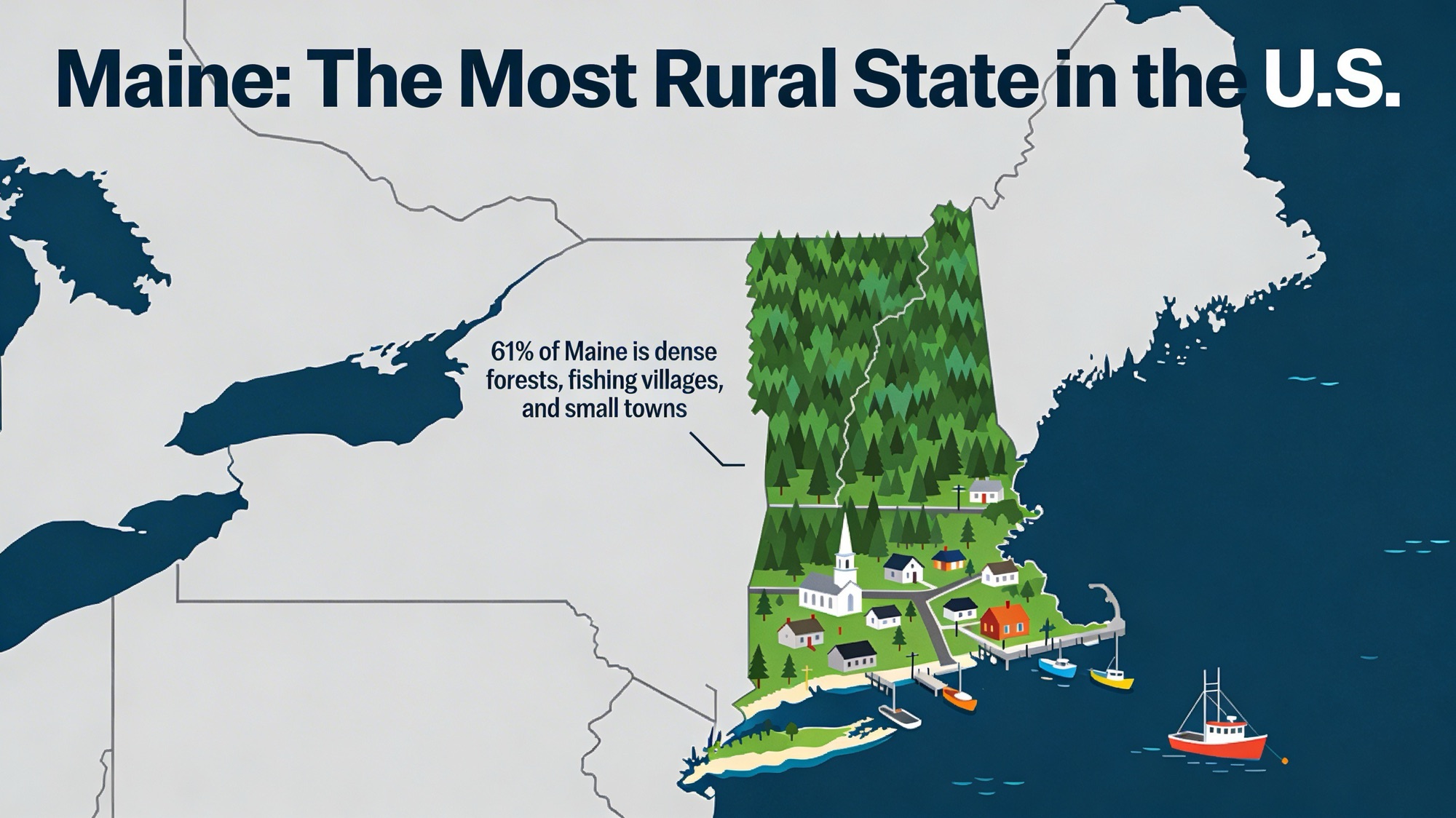
Maine stands out as the most rural state in the United States, offering a unique mix of natural beauty, small-town life, and tightly knit communities that matter greatly to immigrant and diaspora families. For many newcomers, it represents both opportunity and challenge: wide-open landscapes and quiet neighborhoods, but also distance, isolation, and limited access to services compared to big cities.
A Rural State Shaped by Nature
Maine’s identity is deeply shaped by its land and coastline. About 61% of the state is made up of dense forests, scattered fishing villages, and small towns, rather than large metropolitan centers. This geography creates a slower pace of life, where communities often know each other by name and local traditions remain strong. For diaspora communities, this environment can feel peaceful and safe, but it can also mean fewer cultural hubs, fewer ethnic stores, and longer travel times for work, school, or worship.