When Siyad Barre was ousted as Somalia’s president in 1991, he first fled to Kenya where Kenya Air Force gunships, one of them flown by Captain Chesaina provided him with air cover as he crossed the border.
He briefly stayed in Nairobi before heading to Lagos in Nigeria, where he remained until his death in 1995.
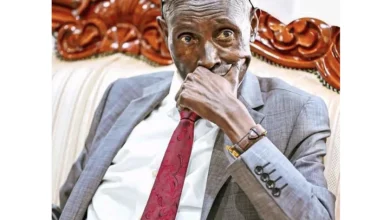
Two Kenyan pilots , Hussein Anshuur and Mohamed Adan of Blue Bird Aviation, have now revealed to the BBC how they were involved in a secret mission to fly Barre’s body from Nigeria to Somalia after his death.
A Nigerian diplomat visited their offices located at Wilson Airport with an offer of a very sensitive but lucrative mission.
He wanted them to charter a plane to fly Barre’s remains from Lagos to his hometown of Garbaharey in southern Somalia for burial. However, the Kenyan government was not to know about the mission.
The two pilots were fearful of the repercussions in case the Kenyan government discovered the mission. At the same time, the deal was lucrative. They requested the diplomat to give them more time to think about it.
They eventually made up their mind and agreed to carry out the mission. However, they demanded an assurance that in case the Kenyan government discovered the mission, the Nigerian government would take responsibility.
Nigeria agreed, and the two pilots embarked on planning their flight path.
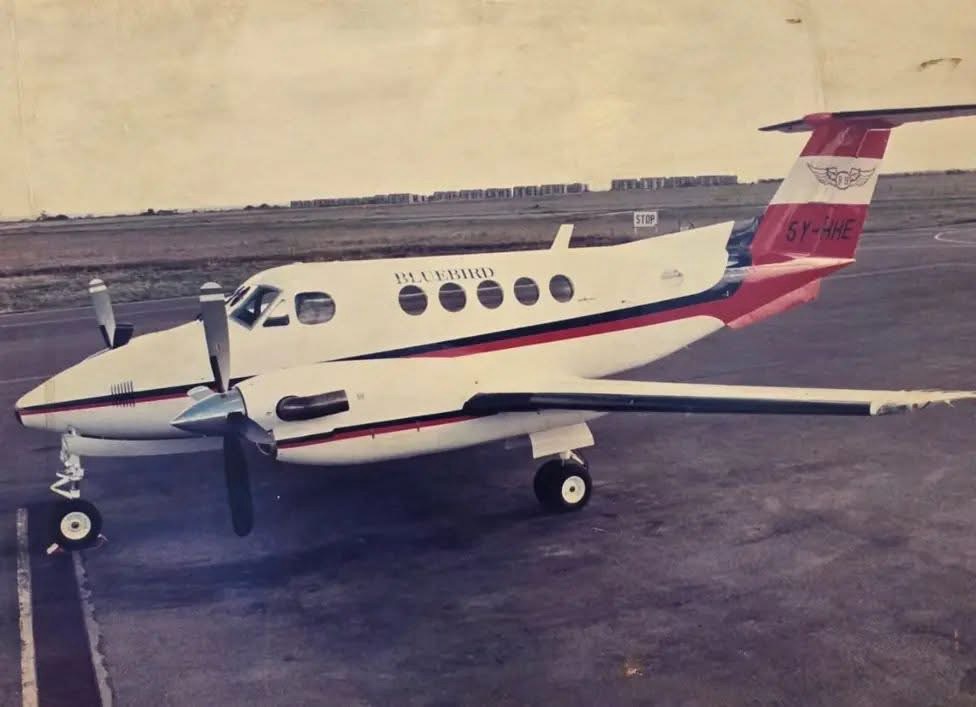
The two pilots filed a false flight plan indicating Kisumu as their destination. They then took off from Wilson Airport in a small Beechcraft King Air B200 , with two Nigerian diplomats on board.
When they got near Kisumu, they switched off the transponders, making it difficult to track the plane and diverted to Entebbe Uganda, where they stopped to refuel. After all, Captain Anshuur had worked in the Kenya Air Force, so he knew how to evade radar.
At Entebbe, they instructed the two Nigerians to remain on the plane and not to talk to anyone. To continue hiding their tracks, the two pilots informed Ugandan authorities at the airport that they had arrived from Kisumu.
They then took off and made another brief stopover in Cameroon to refuel before proceeding to Nigeria. Before entering the Nigeria airspace, the two pilots were instructed to use Nigerian Air Force call sign “WT 001” to avoid any suspicion.
Barre’s casket was loaded onto the plane, which was also boarded by his family members. The plane then took off following the same flight path. They made refuel stopovers in Cameroon and Uganda, where they gave their final destination as Kisumu.
Both Cameroonian and Ugandan authorities did not even realise that they had a body on board.
As they neared Kisumu, the pilots diverted and flew directly to Barre’s hometown of Garbaharey in southern Somalia, where the burial was conducted in accordance with Islamic rites.
With the mission complete the journey back to Wilson Airport from Somalia became the most stressful.
Fearing being caught, the two pilots, upon entering Kenyan airspace, informed Wilson Airport Tower that they were arriving from Mandera. This was to create the impression that it was a domestic flight.
Asked whether he could repeat the same mission again, Captain Anshuur told BBC that he wouldn’t risk because, unlike before, aviation technology has improved, making it very difficult for one to avoid radar detection. Furthermore, he is 65.