Ruto Says Selling State Shares Will Raise Ksh5 Million to Fund ‘Singapore Dream’
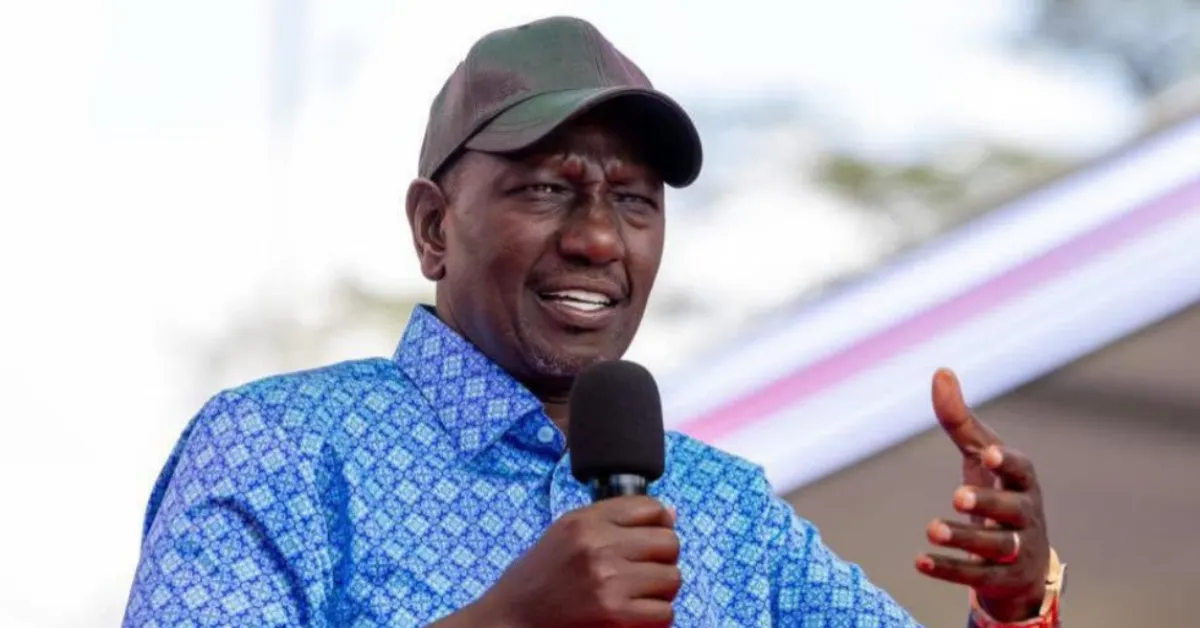
President William Ruto says the government will raise Ksh5 trillion within a year by selling state-owned shares, led by a major public offer of Kenya Pipeline Company.
Speaking at State House, Nairobi, during a meeting with graduate interns under the Affordable Housing Programme, Ruto said the divestiture process had already begun and could meet the target within the set timeframe. He said the plan is intended to finance development projects and support the national budget without increasing public borrowing.
The government’s strategy centres on the Initial Public Offering of Kenya Pipeline Company (KPC), which has been launched at the Nairobi Securities Exchange. The state is offering 65 percent of KPC’s ordinary shares to the public at Ksh9 per share. The offer is the largest IPO in Kenya’s history and the first to be conducted entirely through an electronic platform.
The listing opens one of the country’s most strategic energy companies to local and international investors. It also signals a shift in how the government manages key infrastructure assets, moving towards broader market participation.
Ruto dismissed criticism from political opponents who have questioned the feasibility and transparency of the plan. He said some leaders were contradicting their earlier support for privatisation by turning the issue into a political dispute. He maintained that the objective is economic reform rather than political positioning.
Concerns over accountability have been raised by Kiharu MP Ndindi Nyoro, the former chair of the National Assembly Budget Committee, who has questioned how the share sales will be handled. In response, the President said the transactions are governed by existing laws and supervised by the Capital Markets Authority, with all shares traded openly at the NSE.
The proposal has renewed debate about the direction of Kenya’s economy. While the government views the plan as a route to growth and reduced dependence on external borrowing, critics have warned that structural constraints could limit its success.
Controller of Budget Margaret Nyakang’o has challenged the administration’s ambition to achieve a “Singapore-like” transformation, describing the comparison as unrealistic under current conditions. She said Kenya must first address poverty, low incomes, and household vulnerability before pursuing such a development model.
Nyakang’o also warned that reliance on external financing, including support from the International Monetary Fund, could restrict the government’s ability to implement reforms based on domestic priorities.