Ruto–Sakaja Pact Sparks Legal Battle Over Nairobi’s Autonomy
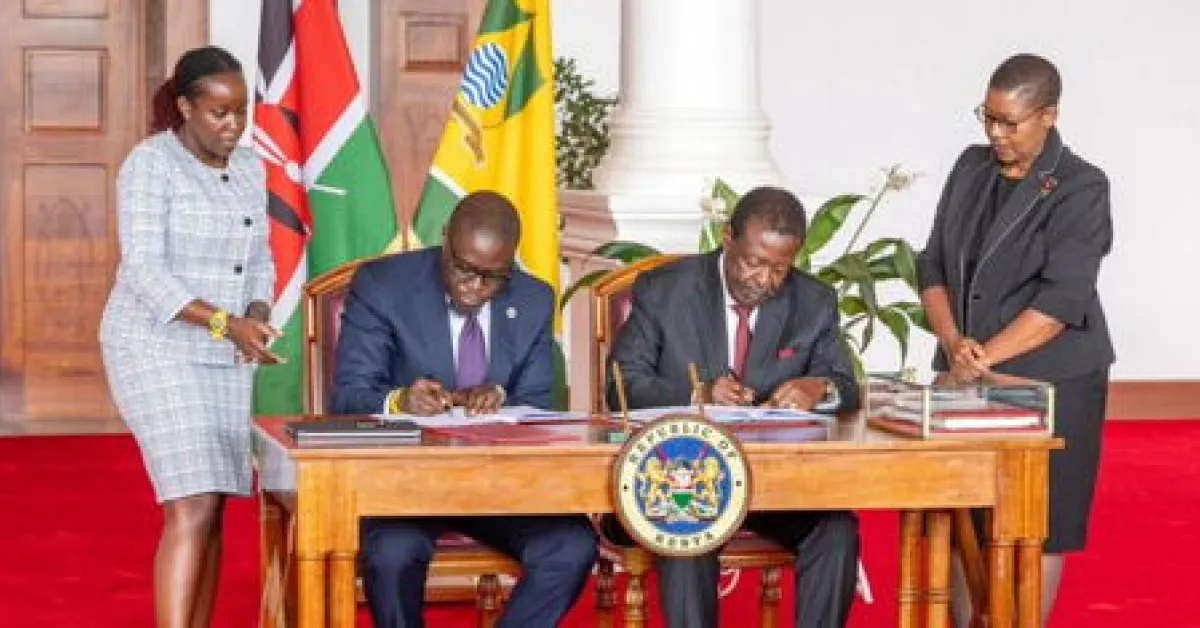
A cooperation agreement between the national government and Nairobi County, signed on 17 February by President William Ruto and Governor Johnson Sakaja, has sparked intense political and legal debate.
The pact, aimed at improving infrastructure, housing, waste management, and river regeneration, has been criticised for potentially undermining the autonomy of the county government. Ruto defended the agreement, emphasising that it was intended to enhance service delivery rather than diminish the county’s authority.
He assured that Governor Sakaja and his team would remain in charge of the city’s administration. However, Nairobi Senator Edwin Sifuna condemned the arrangement, describing it as a “takeover” of Nairobi’s governance.
Sifuna raised concerns about the steering committee, which he claimed is dominated by national government officials, reducing Sakaja’s role. He further criticised the lack of public participation before the pact was signed, accusing the government of bypassing constitutional requirements.
A brief window for public feedback was later opened, but Sifuna deemed it insufficient for a matter of such significance. The senator also questioned the accountability of the agreement, warning that it could complicate the responsibilities between county and national authorities.
He proposed alternative solutions to improve governance in Nairobi, such as timely release of county funds, settling debts owed by government institutions, and full implementation of devolved functions as previously agreed under the coalition government led by Raila Odinga.
The dispute has now entered the legal arena. On 18 February, the High Court expedited a petition challenging the constitutionality of the pact. The petitioners argue that the agreement infringes on the principles of devolution by permitting national government intervention in county affairs without proper safeguards.
The matter is scheduled for hearing on 16 March, with responses due by 27 February. The case has attracted significant attention, with the Council of Governors and the Office of the Auditor General named as interested parties.
The petitioners are seeking an injunction to prevent the implementation of the pact, fearing it could set a precedent for diminishing county autonomy across the country.