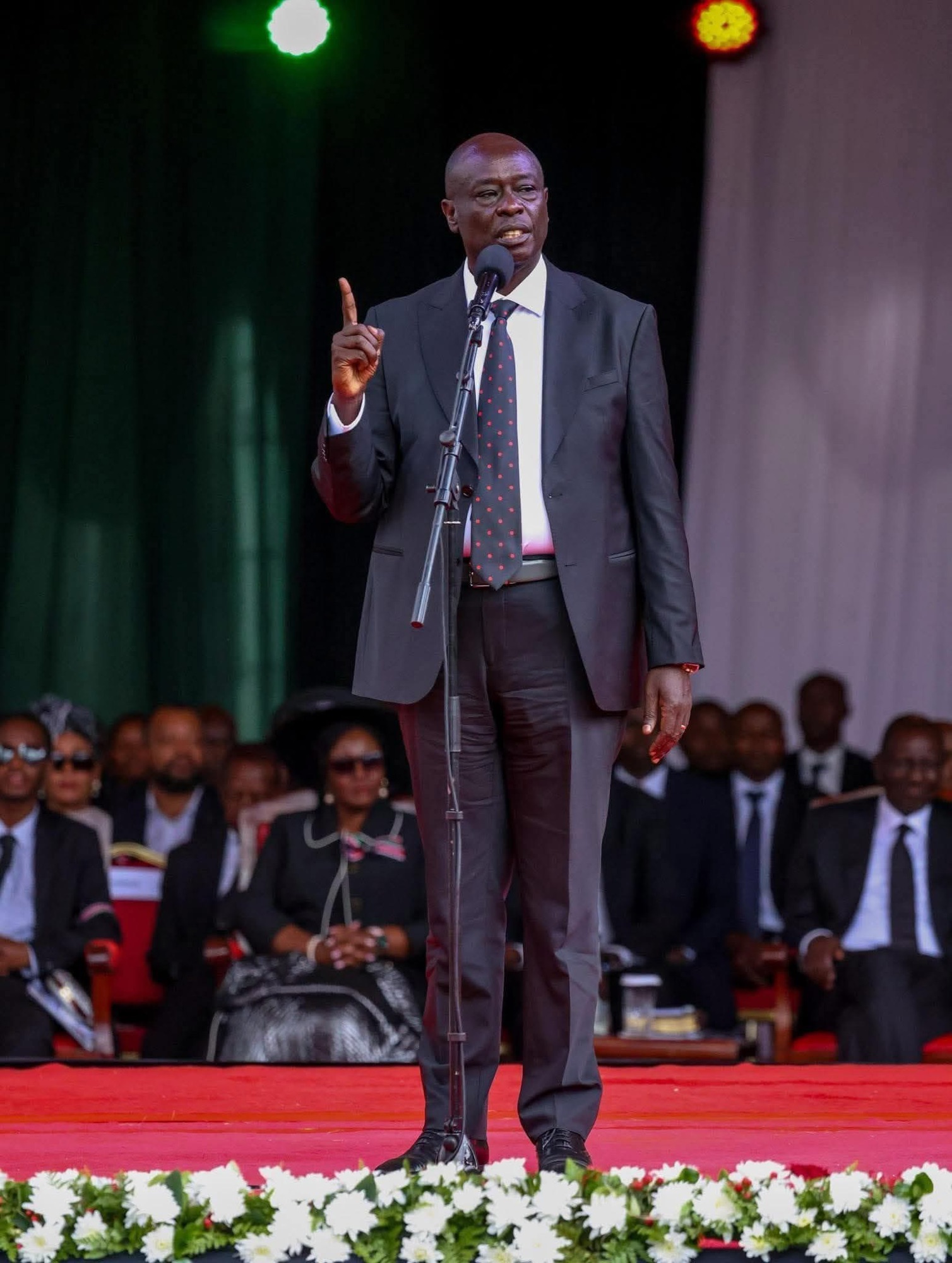
Beyond the chants and cheers, the deputy president sent a clear message he’s building something of his own.
From a communication and strategy point of view, Rigathi Gachagua used that moment very well. He understood the mood of the crowd and handled it carefully.
What stood out first was how strongly the people were with him. The chants, the energy, and the response showed clearly that he had the attention of the ground.
What was even more interesting is that although the crowd was already turning against President William Ruto, Gachagua calmed them down and asked them to let him speak. That was a very smart move. It made him look composed, in control, and able to manage the atmosphere.
He was also wise enough not to confront his opponent directly. Instead, he chose a more calculated path. He did not go full attack on Ruto. He applied pressure in a more strategic way by occasionally touching the President, but directing much of his criticism at those around him.
That made him appear disciplined and politically mature.
He challenged Kimani Ichung’wah by using his own past statements against him. He checked Kithure Kindiki with that powerful “inheritance before burial” line, which gave him the image of someone speaking from maturity and seniority. He also questioned Moses Wetang’ula’s authority and the manner in which Parliament is being managed.
But for me, the biggest statement was when he introduced his people for 2027 right there in the presence of UDA leaders.
That was not just a speech.
That was not just a reaction.
That was a signal.
A signal that he is building his own structure, shaping his own camp, and positioning himself as a political force of his own.
Whether people agree with him or not, today’s events will definitely leave serious questions in the minds of Ruto, UDA, and anyone watching the direction of Kenyan politics.