How one Kenyan attorney in Boston is turning a village childhood, global education, and digital age challenges into tools for justice.
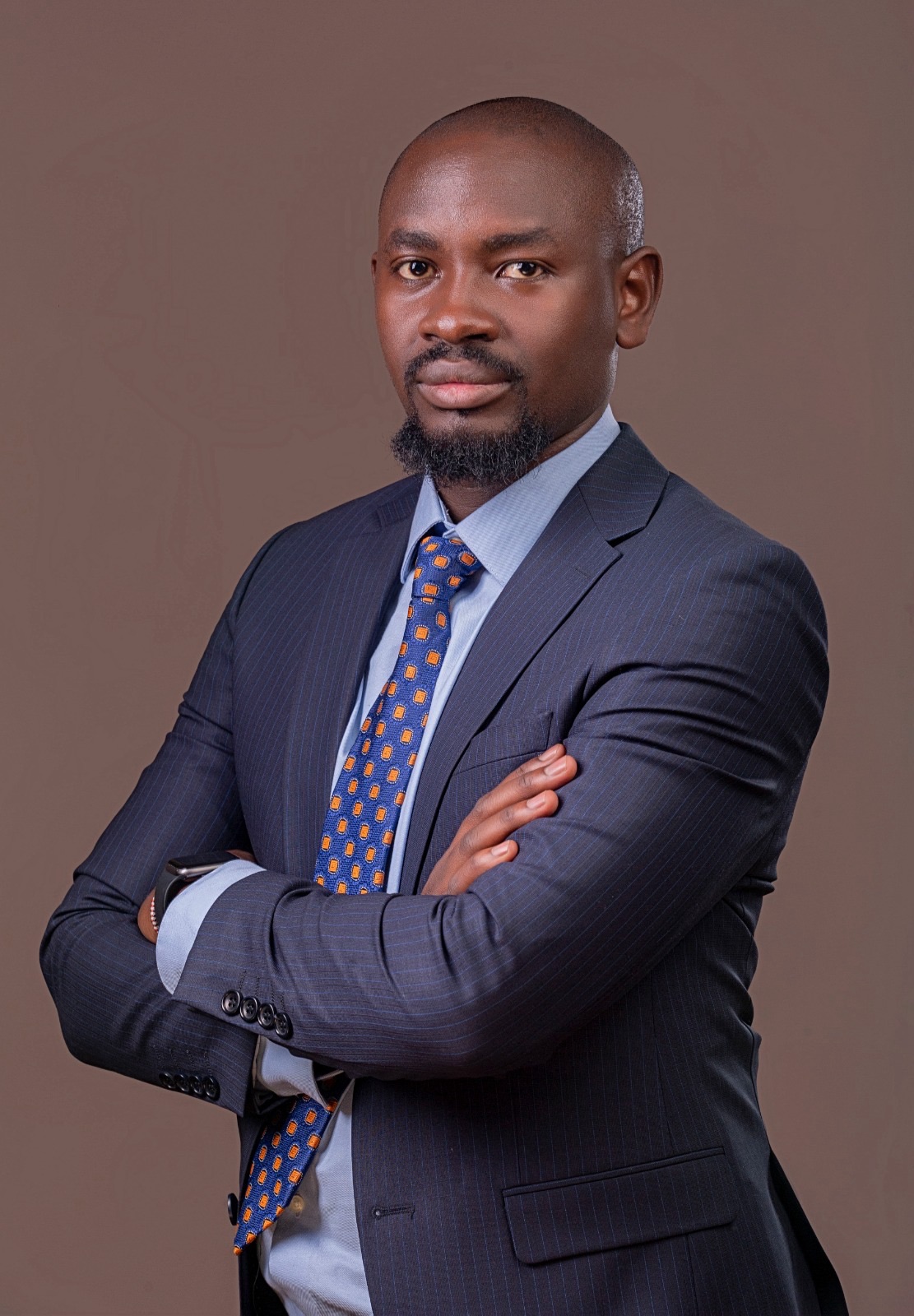
The Road from Ogembo to Suffolk: Jephnei Orina’s Pursuit of Legal Excellence
1. Please introduce yourself tell us a bit about your background, education, and family roots in Kenya.
My name is Jephnei Nyakwama Orina, a Kenyan-born attorney and Advocate of the High Court of Kenya who is also admitted to practice law in the Commonwealth of Massachusetts. I was born and raised in Ogembo Town in Bomachoge Chache Constituency, Kisii County, where I grew up in a loving family environment that valued education and perseverance.
My early education began at St. Charles & Caroline Makara Primary School in South Mugirango,Kisii County after which I attended St. Joseph’s School Rapogi in Migori County for my secondary education.
I later pursued a Bachelor of Education (Arts) degree at Kisii University, majoring in History and Kiswahili, before transitioning into the legal profession. I then obtained a Bachelor of Laws (LL.B.) from the University of Nairobi and a Postgraduate Diploma in Law from the Kenya School of Law, which qualified me as an Advocate of the High Court of Kenya. I subsequently pursued further graduate studies in the United States, earning a Master of Laws (LL.M.) in International Business Law from Northeastern University School of Law in Boston, and I am currently pursuing a Doctor of Juridical Science (PhD in Law) at Suffolk University Law School, where my research focuses on data protection, children’s online privacy, and digital rights in the modern information age and I am scheduled to graduate on May 17th 2026
2. What inspired you to pursue a law degree at Suffolk University in Boston, and how did you prepare for such a demanding program?
After years of practicing law and studying in Kenya and the United States, I wanted to pursue advanced legal research that could contribute to legal reform in emerging areas such as data privacy and digital rights. Suffolk University Law School in Boston offered a strong academic environment and a global legal community. Preparing for the program required extensive research preparation, strong writing discipline, and a clear research agenda.
Pursuing a doctoral degree was also deeply personal. From a young age, it was my dream to attain a PhD before I turn 30, which is nearly impossible in Kenya. At the same time, being a Black man, an immigrant, foreign educated and a minority, you quickly realize that you need to work and study double our white male colleagues to compete in the American market. That reality made it necessary for me to pursue a PhD so that I could strengthen my academic credentials and compete effectively.
3. How was your experience transitioning from life in Kenya to studying law in Boston academically, socially, and culturally?
Moving from Kenya to Boston was a completely different experience socially, economically, and culturally. The society, the pace of life, and the academic environment are very different. However, growing up in Nyanza from a humble background prepared me for such transitions. Many students attended school barefoot in semi-permanent classrooms, and resources were limited, but those experiences-builtresilience.My secondary education was in a boarding school with students from across the county, which already exposed me to living and learning with people from different backgrounds. Later transitioning to Nairobi for university life was another major adjustment that required independence and adaptability.
Those experiences teach you how to live, survive, and thrive anywhere. By the time I moved to Boston, I had already learned how to navigate new environments, adapt to different cultures, and focus on opportunities rather than obstacles.
4. What were some of the most challenging yet rewarding moments during your law school journey at Suffolk?
One of the biggest challenges was balancing advanced legal research with professional responsibilities and personal commitments, while also dealing with financial struggles and being away from my family.
However, the most rewarding aspect has been contributing to scholarship on children’s digital privacy and legal protection in the digital era, an issue that affects millions of young people across the world.
5. Could you share a key legal insight or lesson from Suffolk Law that continues to shape how you think and work today?
One key lesson is that law must evolve alongside technological change. The legal system must continuously adapt to address new risks emerging from digital platforms, artificial intelligence, and global information flows. The law is made for society, and therefore it must evolve to fit the changing needs of society. This realization has shaped my research and professional work, particularly in the areas of data protection and digital governance.
6. Tell us about your academic or professional path before joining Suffolk Law.
Before pursuing my doctoral studies, I followed a diverse academic and professional path.
I first earned a Bachelor of Education (Arts) from Kisii University, majoring in History and Kiswahili. During that time, I worked as a paralegal at Ochoki & Company Advocates in Kisii, which sparked my interest in the legal profession.
That experience inspired me to pursue law, leading me to enroll at the University of Nairobi for a Bachelor of Laws (LLB). I later completed a Postgraduate Diploma in Law at the Kenya School of Law, qualifying me as an Advocate of the High Court of Kenya.
I also obtained a Master of Laws (LL.M.) in International Business Law from Northeastern University School of Law in Boston before joining Suffolk University Law School for my PhD.
7. How has your legal education at Suffolk changed the way you approach justice, advocacy, and decision-making?
My legal education strengthened my belief that justice requires both legal expertise and policy reform. Lawyers must not only represent clients but also contribute to building stronger legal institutions and regulatory frameworks. Legal academic scholars must not only research the law but also push for legal reforms arising from their work. Academic research provides an opportunity to shape how law responds to emerging societal challenges.
8. How did studying with people from diverse backgrounds influence your outlook on the legal system and justice in Africa?
Interacting with scholars and practitioners from different legal systems helped me understand the importance of comparative legal perspectives. Africa has unique legal challenges, but it can also learn from global best practices to help strengthen our young democracies. Nobody has the monopoly of knowledge, and when we collectively share ideas and experiences, we create a world that is more fair and just for everyone regardless of their nationality.
9. What legal project are you most proud of?
One of the projects I am most proud of is my research on children’s online privacy and the right to be forgotten, which explores how legal systems can better protect children from long-term digital harm. The goal is to develop practical policy solutions that can strengthen digital privacy protections for children in Kenya and beyond. As part of this work, I have also filed a petition with the Clerk of the Parliament of Kenya proposing the Child Online Protection Bill.
In addition, my legal practice as an immigration attorney is something I take great pride in, particularly when I see families reunite and pursue their American dream.
10. What advice would you give young Kenyans who want to study law abroad?
Preparation is essential. Students should focus on strong academic foundations, research skills, and legal writing. Equally important is mental resilience, because studying abroad requires adapting to new academic expectations, cultures, and environments.
The doors of the world are open to those who read and use the internet correctly to pursue opportunities beyond Kenya. Kenya is a beautiful country, and we love it, but there are many opportunities elsewhere. You only need to be hungry for those opportunities, and you will begin to see how many exist. Use your internet to search for jobs, scholarships, and academic programs abroad instead of spending most of your time on TikTok and social media.
If you compare the size of the economies, the United States has a GDP of over $30 trillion, while Kenya’s GDP is roughly $140 billion. That difference alone shows how many more opportunities exist in larger global markets. So why confine yourself to one country? The world has enough opportunities for Kenyan lawyers, but Kenya alone does not have enough opportunities for all Kenyan lawyers.
11. Tell us about your current legal career.
I currently practice law and engage in legal research across areas including immigration law, corporate law, regulatory compliance, and technology law.
My broader mission is to help bridge legal practice between Africa and the United States, while contributing to policy discussions on technology and digital rights.
12. What are some challenges you have faced in your legal career?
One challenge has been navigating multiple legal systems across jurisdictions, each with different rules and regulatory frameworks. The key to overcoming this challenge is continuous learning and collaboration with professionals across legal systems.
At the same time, being a person of color, an immigrant, foreign educated and a minority, you quickly realize you come without privilege and that you need to work double our other colleagues to prove that you are capable and equally qualified to compete in the American market. Financial struggle is also a challenge, affording the high cost of pursuing American education considering the humble background we come from and that all we came with to this country was a one-way ticket, a suitcase and a dream. Being away from family as an immigrant is also a big challenge, because you do not get to see your loved ones as much as you would want.
13. How do you balance professional ambition with personal life?
Balance requires intentional discipline. Professional success is important, but maintaining connections with family, community, and personal values is equally important.
Honestly, I do not think I have fully achieved that balance yet. I am still in the roller coaster phase. I still work about 12–16 hours a day while completing my PhD dissertation, teaching at different colleges, and managing family responsibilities. However, over the weekend I try to reset. I go to church on Saturday and try to be involved in the community on Sunday.
14. How important has mentorship been in your journey?
Mentorship has been extremely important. Experienced professionals provide guidance and perspective that help young lawyers grow.
No successful career is built alone; mentorship is an essential part of professional development.
15. How do you stay connected to Kenya?
Despite working internationally, I remain deeply connected to Kenya through professional engagement, research, and public conversations about legal reform and governance. I teach in Kenyan colleges and continue to actively follow what is going on in the country. I try to watch Citizen TV 9 PM news on YouTube regularly and stay engaged through many professional and community WhatsApp groups.
I still practice law in Kenya and remain actively engaged with the Kenyan judicial system and the Law Society of Kenya. Beyond my legal work, I am also involved in public leadership and currently serve as the party leader of a newly formed political party, on whose ticket I intend to make my second attempt at the presidency in 2027. I also travel to Kenya several times a year to maintain those connections and remain engaged with the country’s development.
16. What values guide your work as a lawyer?
Integrity, professionalism, and respect for the rule of law guide my work. Lawyers serve as guardians of justice and must uphold the highest ethical standards.
17. What role will technology play in the future of law in Africa?
Technology will transform access to justice by making legal information and services more accessible. Our people perish because of ignorance.
However, strong regulatory frameworks are necessary to protect privacy, fairness, and accountability in digital environments.
18. How important has networking been?
Networking has played a significant role in my career. Most of the opportunities that have come my way are a result of networking. Building relationships with colleagues, professors, and professionals creates opportunities for collaboration and growth. Your network is your net worth.
19. What are your long-term goals?
My long-term goal is to serve humanity at every opportunity I get. Whether it is through my work as a lawyer, contributing to legal scholarship and law reform, or even serving in public leadership as President of the Republic of Kenya, my focus is to use the law and public service to improve people’s lives and strengthen institutions.
20. What message do you have for young women in Kenya who want to pursue law?
The legal profession needs talented and determined women. Law is a powerful tool for social change, and young women should pursue their ambitions with confidence and resilience.
Jephnei Orina, Esq
+1(857)3859381
[email protected]