From BSN to Big Paycheck: Why CRNAs Are a Game-Changer for Diaspora Nurses in America
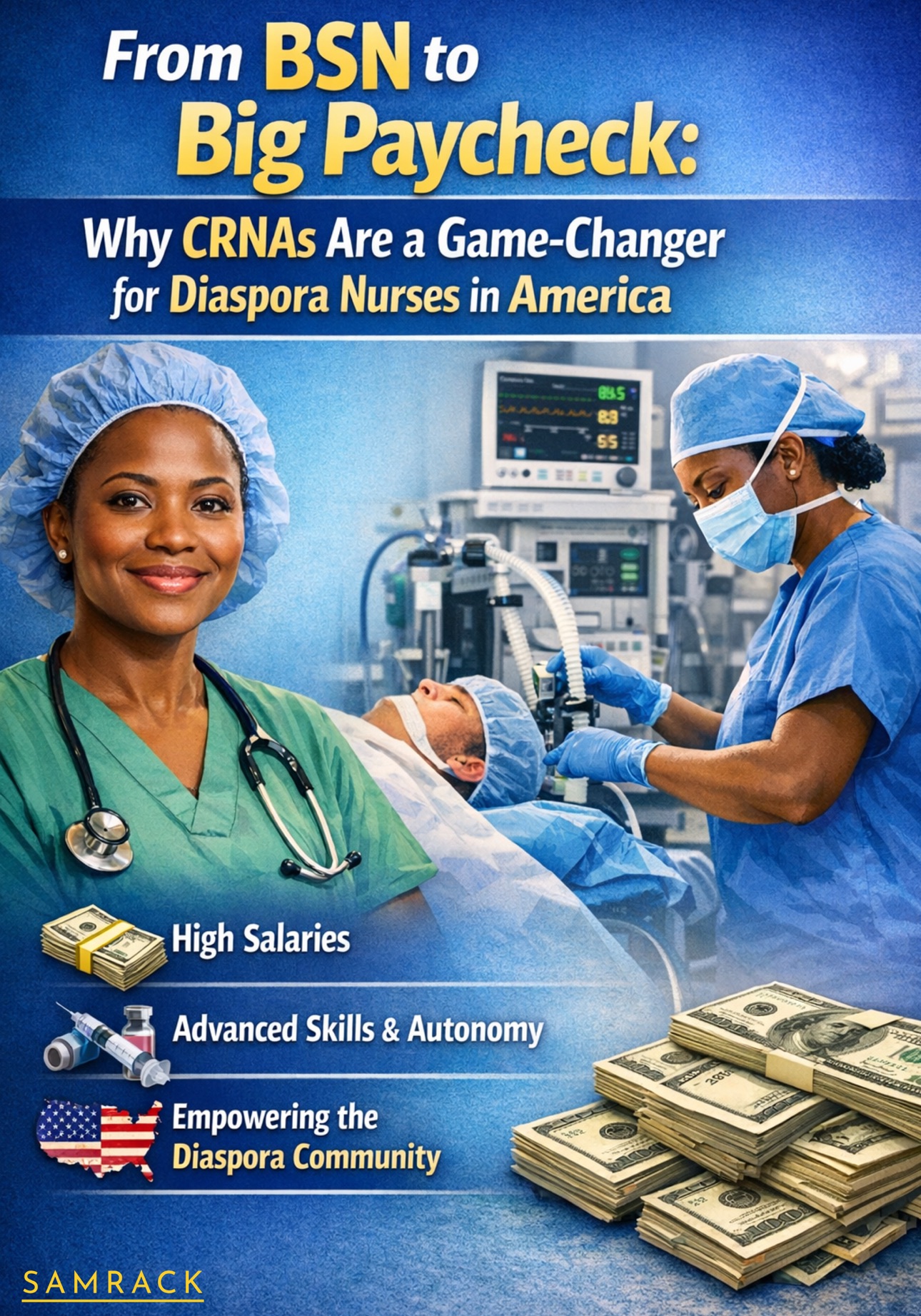
CRNAs: The Unsung High Earners in America’s Healthcare Field
For many in the African and global diaspora, nursing has been a trusted doorway into the American healthcare system and a solid foundation for building a new life. But beyond the traditional bedside roles, there is a powerful, often overlooked pathway that combines high impact with high income: becoming a Certified Registered Nurse Anesthetist (CRNA).
CRNAs are advanced practice nurses who specialize in anesthesia and pain management before, during, and after surgical procedures. In many hospitals especially in rural areas they are the primary anesthesia providers, ensuring patients can safely undergo everything from C‑sections and trauma surgeries to routine procedures. Their work requires calm under pressure, critical thinking, and a strong foundation in critical care nursing.
Financially, the rewards are significant. Recent national data show that nurse anesthetists have a median salary above 223,000 dollars per year, placing them among the highest-paid advanced practice nurses in the United States. Some estimates put average earnings even higher, with certain CRNAs reporting annual pay in the mid-200,000 dollar range depending on location, experience, and workplace setting. For a diaspora nurse supporting family both in the U.S. and back home, that level of income can be truly life-changing.
The journey, however, is demanding and that is exactly why it pays so well. The typical path begins with a Bachelor of Science in Nursing (BSN), followed by at least one year of full-time intensive care unit (ICU) experience, though competitive applicants often have 2–5 years in critical care. From there, candidates apply to a doctoral-level nurse anesthesia program (such as a DNP or DNAP) that usually takes about 3–4 years of full-time, intensive study. After graduation, they must pass a national certification exam before practicing as CRNAs.
For members of the diaspora, this path may sound long, but it is also clear and structured. Many CRNA programs value candidates with diverse backgrounds, strong work ethics, and real-world life experience qualities that immigrant and first-generation nurses often have in abundance. With strategic planning, mentorship, and careful financial management, a nurse can move from entry-level bedside care to a role that offers autonomy, respect, and the ability to make a profound difference in both patients’ lives and family finances.
For a nurse in our diaspora community reading this today, the message is simple: if you already love nursing, are willing to put in the work in the ICU, and feel called to a higher level of responsibility and reward, nurse anesthesiology may be your next step. It is more than a job title it is a pathway to influence, stability, and generational impact in the United States and beyond.
https://connect.northeastern.edu/portal