Fifteen Dollars and a Thousand Futures: The Story of Hilde Back and Chris Mburu
In 1982, his name was Chris Mburu — a gifted student with the kind of brilliance teachers notice immediately. But in a mud-walled home lit by a smoking kerosene lamp, talent alone could not pay tuition. His family had little. And without school fees, his education would end before his promise ever had the chance to bloom.
The road ahead already seemed decided for him: coffee fields, hard labor, small wages, and dreams quietly buried beneath survival.
But thousands of miles away, in Sweden, an elderly kindergarten teacher was turning the pages of a child sponsorship brochure.
Her name was Hilde Back.
She was 80 years old, living simply on a pension. She was not rich. She had no grand platform, no foundation, no public audience. What she had was fifteen dollars.
So she chose a child’s name.
Chris Mburu. Kenya.
Every school term, she sent that small amount. No fanfare. No speeches. No expectation of being remembered. Just a faithful act of kindness, repeated again and again.
Fifteen dollars.
To her, it may have seemed small.
To him, it was everything.
Because of those payments, Chris stayed in school. He wrote to Hilde about his exams, his teachers, his hopes. She wrote back with warmth and encouragement. And somewhere in those letters, a life-changing truth took root inside him:
A stranger believed he was worth investing in.
That belief became fuel.
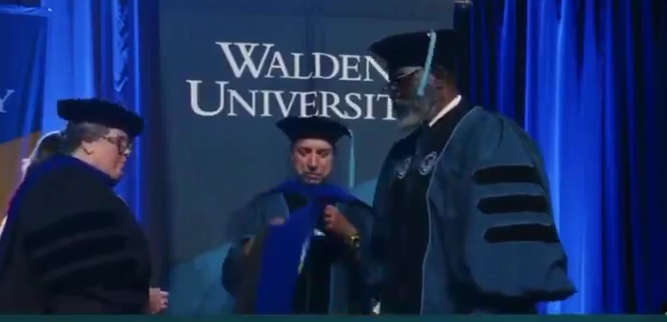
Chris excelled. He graduated at the top of his law class at the University of Nairobi. He earned a Fulbright scholarship to Harvard. He went on to become a United Nations human rights lawyer, helping prosecute genocide and crimes against humanity.
The boy whose future once hung by a thread grew into a man committed to justice.
Still, one question stayed with him:
Who was the woman who changed my life?
In 2001, Chris created a scholarship program for Kenyan students who, like him, were trapped by poverty but full of promise. He wanted to name it after the woman who had once helped him. There was only one problem — he knew almost nothing about her beyond her name.
So the search began.
With the help of the Swedish ambassador, they found her.
Hilde Back.
Alive.
Still in Sweden.
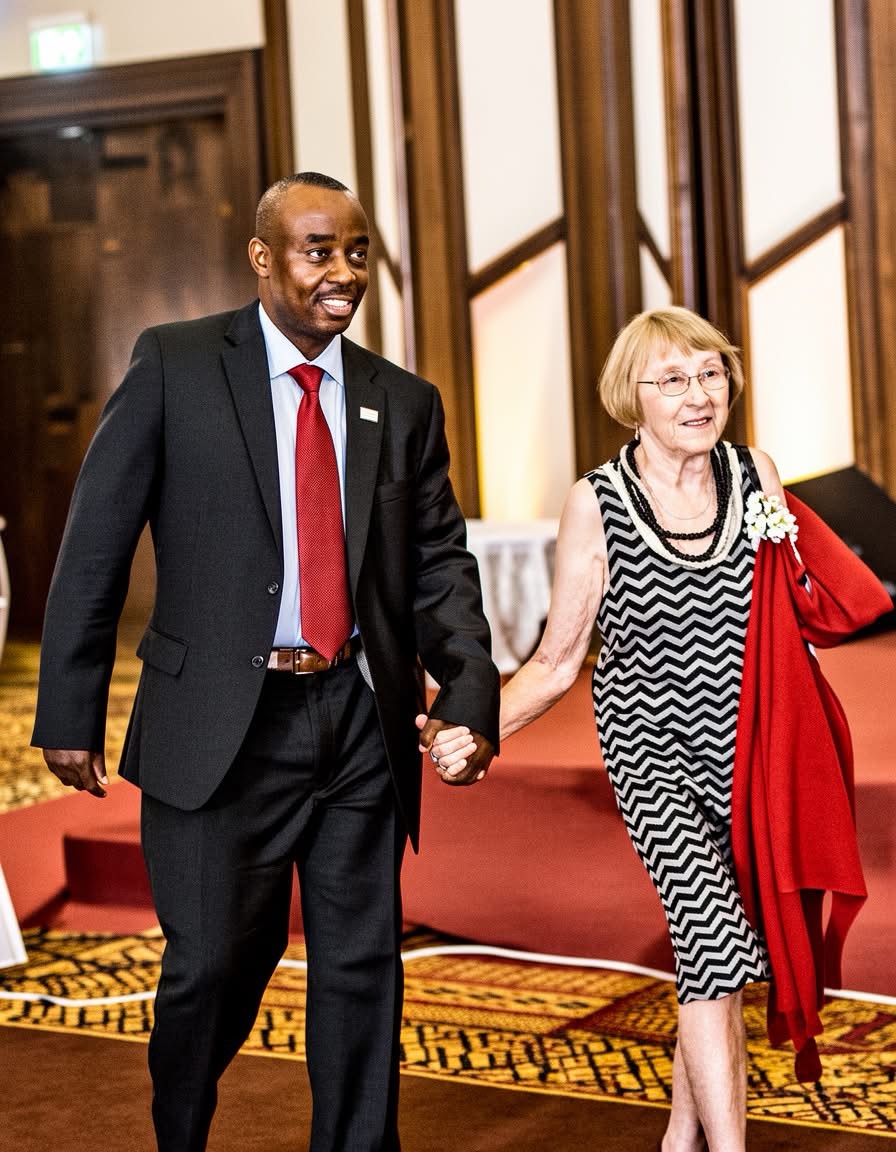
When Chris finally met her, he expected someone larger than life — perhaps a famous philanthropist surrounded by comfort and recognition. Instead, he found a gentle, humble woman in a small apartment, surprised that anyone thought she had done something extraordinary.
And then the story deepened.
As a filmmaker began tracing Hilde’s past, another truth came into view — one Hilde herself had never centered.
She had once been the child in need of rescue.
Born in Germany in 1922 to a Jewish family, Hilde’s life was shattered when the Nazis tightened their grip. Jewish children were pushed out of schools. As danger closed in, Hilde was smuggled to Sweden as a teenager. Her parents could not come with her. Immigration rules kept many older Jews out.
Her father died in a concentration camp.
Her mother vanished into the machinery of genocide and was never heard from again.
Strangers had once saved Hilde.
Strangers had once made it possible for her to live, to learn, to survive.
And decades later, without fully telling that story, she had passed that same mercy forward to a child in Kenya she would never meet.
When Chris learned the full weight of her history, he wept.
The meaning of it was almost too much to hold.
A Holocaust survivor had unknowingly helped educate a man who would spend his life fighting the very kinds of hatred, violence, and dehumanization that once destroyed her family.
That is how grace moves through history.
Quietly.
Person to person.
Wound to healing.
Life to life.
In 2003, Hilde traveled to Kenya for the launch of the Hilde Back Education Fund. Villagers welcomed her with songs, embraces, and gratitude too deep for words. Children whose lives had been redirected by opportunity stood before her because she had once decided that fifteen dollars mattered.
She looked overwhelmed.
Because in her mind, she had only helped one boy.
But that one boy helped build something far greater than either of them could have imagined.
The fund went on to support nearly a thousand students. Many entered universities around the world. Some came back as doctors, lawyers, and teachers. Many now give back themselves, helping another child cross the same dangerous distance between potential and poverty.
The ripple never stopped.
Hilde Back died in 2021 at the age of 98.
She never chased recognition.
Never tried to become a symbol.
Never imagined a foundation would carry her name.
Never guessed that the boy she once sponsored would one day stand in international courtrooms speaking for victims of genocide.
She helped one child.
That child helped hundreds.
Those hundreds are now helping thousands more.
The world often teaches us to wait for giants — for wealthy donors, sweeping gestures, famous names, and grand rescues.
But history does not always turn on power.
Sometimes it turns because an elderly teacher in a small Swedish apartment decides that fifteen dollars, sent faithfully, is enough to change a life.
One name on a page.
One check each term.
One act of belief.
And the ripple is still moving.